
Detergent Residue on Travel Clothes: Rinse, Dry, and Recheck
Table of Contents
Quick answer
If travel clothes feel stiff, slick, unusually scented, or show pale streaks after washing, stop adding products and check the care label. For ordinary washable fabric, rinse thoroughly in clean water or use an approved extra-rinse cycle without more detergent. Dry completely and inspect again. If a Sigiriya laundry handled the item, photograph the issue and ask what products and process were used before requesting a re-rinse.
Identify the likely residue
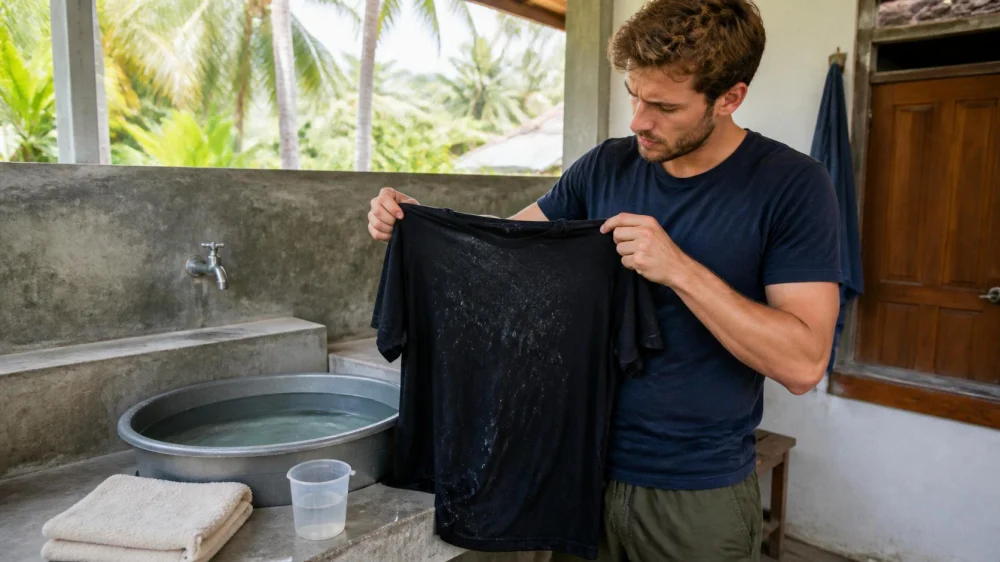
White or pale marks can come from undissolved detergent, concentrated product, minerals, deodorant, sunscreen, soil, or fabric abrasion. A strong fragrance or slippery feel may suggest product remains, but appearance alone does not prove the cause.
Check several areas, including folds, seams, pockets, and dark fabric where deposits are easy to see. Compare with an untreated section in natural light. Note whether the mark brushes away dry, changes with clean water, or appears embedded in the fibre.
Check the care label
Read washing, drying, and special-care instructions before adding water. Some structured, coated, dyed, or dry-clean-only items should return to a professional rather than being soaked. Empty pockets, fasten items as directed, and separate colours that may bleed.
If the garment has a water-repellent, insect-treated, flame-resistant, printed, or other performance finish, follow its manufacturer guidance. Repeated washing or an unsuitable product can alter that finish.
Rinse washable clothes
For a hand-washable item, use a clean basin and clean water at a temperature allowed by the label. Submerge and move the garment gently, then drain the water. Repeat with fresh water until it remains reasonably clear and the garment no longer feels soapy. Do not add another detergent to solve possible detergent residue.
Support wet fabric when lifting it. Avoid aggressive wringing, scrubbing, or twisting unless the label permits it. Change the water rather than continuing in a concentrated rinse bath.
Use a machine re-rinse carefully
If both the garment and available machine are suitable, choose a rinse or extra-rinse cycle without added detergent or softener. Do not overload the drum because clothes need space for water to move through them. Confirm that the dispenser is clean and not automatically releasing another product.
A shared or unfamiliar machine may have residue from previous use. Inspect visible compartments, follow operating instructions, and ask the owner or laundry staff rather than dismantling equipment.
Return to the laundry service
Photograph pale streaks, spots, or packaging condition before changing the garment further. Bring the receipt or collection list and identify the affected item. Ask which detergent, softener, scent product, washing method, and drying process were used.
Request a compatible re-rinse if the fabric allows it, and agree whether the service or traveller will handle the item. Ask the service to contact you before applying stain remover, bleach, fragrance, or a different solvent. Record the resolution at collection.
Respond to skin discomfort
If clothing causes itching, burning, redness, breathing difficulty, or another unexpected reaction, remove it and stop wearing it. Rinse affected skin with clean water as appropriate and follow local medical advice. Seek urgent help for severe symptoms such as breathing trouble, facial swelling, faintness, or rapidly worsening illness.
Do not diagnose the cause from the fabric alone. Keep the garment separate and record known laundry products so a healthcare professional can use that information.
Reduce repeat problems
- Use the detergent dose for load size, water, and product instructions.
- Allow powder to dissolve as directed.
- Do not overfill a washer or hand-wash basin.
- Choose an extra rinse when the garment instructions and machine allow it.
- Tell a service about fragrance or product restrictions before handoff.
- Inspect dark garments before they are heat-dried and packed.
More detergent does not necessarily produce a cleaner result. Accurate dosing and adequate rinsing are the useful controls.
Residue checklist
- Photograph and inspect the marks in good light.
- Read the full garment care label.
- Separate the item from clean packed clothes.
- Rinse with clean water if the fabric allows.
- Avoid adding detergent, softener, bleach, or home mixtures.
- Use an extra-rinse cycle only in a suitable machine.
- Dry according to the label and inspect again.
- Ask the laundry service to document products and rework.
- Stop wearing the garment if symptoms occur.
FAQ
Are white streaks always detergent?
No. Minerals, personal-care products, soil, dye change, and abrasion may look similar. Start with gentle inspection and a label-compatible rinse.
Can I add vinegar to the rinse?
Do not mix or add a chemical unless the garment, machine, and product instructions specifically support it. Unknown residues can react unpredictably.
Should I use hot water?
Only when the care label permits it. Water that is too hot can affect colour, shape, stretch, or finishes.
What if the mark remains after rinsing?
Stop repeated treatment, avoid heat, and ask a qualified laundry professional to identify the fabric and likely cause.
Next steps
Document the residue, check the care label, and use clean water rather than adding more chemistry. Re-rinse only with a compatible method, dry completely, and review the result. When a service handled the item, discuss products and an agreed rework before further treatment.
Evidence note: Residues, fabrics, finishes, water, and laundry products vary. Garment, machine, and product instructions plus professional or medical advice take priority.





 Vishlight detergent5.0 (1 reviews)
 University Laundry0.0 (0 reviews)
 Star lanka laundry5.0 (20 reviews)
 Red Rose Washing Hub🌹5.0 (4 reviews)
 Laundry service3.0 (3 reviews)
 KARISHMAN QUICK WASH LAUNDRY4.0 (19 reviews)
 Linen Travel Clothes: Wash, Dry, and Press Without Damage
 Why Your Washing Machine Might Be Making Clothes Smell Worse
 Laundry Smell Doesn't Last Long? Here’s What Actually Helps
 Best Practices for Washing Silk Blouses Without Damage
 How to Remove Red Wine Stains From White Cotton Shirts
 Laundry Turnaround Times: What Travellers Should Confirm