
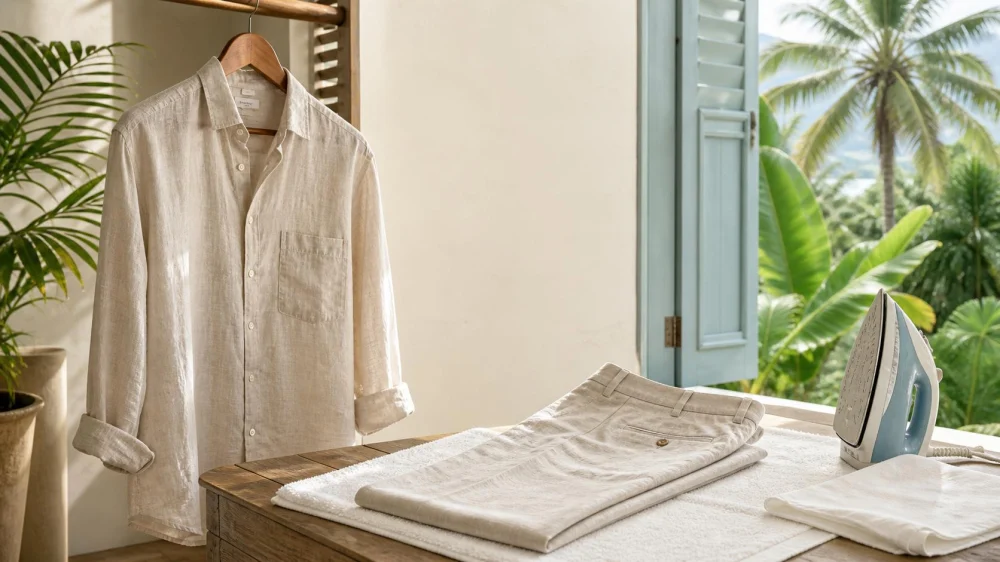
Linen Travel Clothes: Wash, Dry, and Press Without Damage
Table of contents
- Quick answer
- Identify the garment, not just the fibre
- Prepare and sort the load
- Wash with the labelled method
- Dry with shape and shrinkage in mind
- Press or steam only as allowed
- Give a laundry service precise instructions
- Pack and rewear in humid travel
- Respond to shrinkage, shine, and distortion
- Frequently asked questions
- Sources and verification
- Conclusion
Quick answer
For linen travel clothes, follow the garment’s permanent care label rather than a generic rule for linen fibre. Close fasteners, sort by colour and weight, use the labelled hand- or machine-wash method and temperature, and avoid unapproved bleach or softener. Remove promptly, reshape, and use the specified drying method. Press or steam only at the allowed setting, protect dark surfaces from shine, and store the garment only when completely dry.
Central Cleaners
AnuradhapuraNorth Central Province
No.561/B, 41 Maithripala Senanayake Road, Anuradhapura 50000, Sri Lanka
Identify the garment, not just the fibre
A linen shirt may be pure flax fibre, blended with cotton, viscose, wool, silk, or synthetic fibre, lined, coated, embroidered, tailored with interfacing, or decorated with hardware. Those components can change safe washing and finishing. The word “linen” on a product page does not replace the care label sewn into the actual garment.
Read fibre content and every care instruction: hand or machine wash, water temperature, cycle, bleach, tumble dry or line dry, ironing, steaming, and dry cleaning. Photograph the label before a long trip. If the instructions say dry clean only or contain a warning, do not reinterpret them because another linen item survived washing.
The U.S. Federal Trade Commission explains that covered clothing labels must give regular-care instructions and warn against procedures consumers might otherwise assume are safe. That principle is useful wherever a garment is purchased: the maker’s supported procedure is more relevant than an online fibre-care shortcut.
Nilaveli Laundry Service
NilaveliTrincomaleeEastern Province
Al-Fathah Road, Ward 01, Nilaveli 31010, Sri Lanka
Prepare and sort the load
Empty pockets and remove tissues, receipts, pens, lip balm, and coins. Close zips, fasten hooks, and secure removable belts according to the label. Turn the garment inside out when the manufacturer recommends it. Repair an opening seam or loose button before agitation can enlarge the damage.
Sort light, dark, and bright colours. New deeply dyed linen may release colour, while pale fabric can pick up dye or lint. Separate heavy towels, denim, rough zips, and hook-and-loop fasteners that can abrade the linen surface. Wash a coordinated garment set together when the maker recommends it so colour and appearance change at a similar rate.
Inspect stains under good light. Note the source, age, and treatments already attempted. Blot fresh liquid; do not rub grit or oily residue through the weave. Test no chemical unless the product and garment directions support it.
Wash with the labelled method
For hand washing, use a clean basin, the stated temperature, and a measured amount of suitable detergent. Dissolve detergent before adding the garment. Move it gently through water without twisting, hard rubbing, or prolonged soaking unless the label permits those actions. Support a wet dress or trousers when lifting because water adds weight.
For machine washing, select the labelled temperature and cycle. Do not overload the drum; linen needs room for water and movement, while crowding can increase creasing and reduce rinsing. Use a mesh bag for a delicate permitted item, but remember the bag does not make an unsafe cycle safe.
Use only the detergent quantity needed for the load and local water conditions. Excess product can leave residue. Do not add chlorine bleach, oxygen bleach, fabric softener, enzyme treatment, vinegar, or another additive unless both the garment and chemical labels allow it. Never mix laundry chemicals.
If a hand-washed garment feels soapy, rinse at a compatible temperature until residue is removed. Sudden temperature changes and rough handling can affect some blends or constructions. Press water out gently rather than wringing.
Dry with shape and shrinkage in mind
Remove linen promptly at the end of washing. Shake lightly, smooth seams, align plackets, straighten collars and cuffs, and restore the intended shape. Leaving a wet garment compressed in a basket sets deep creases and can create odour.
Follow the label for tumble, line, or flat drying. If tumble drying is permitted, use the specified temperature and avoid extending the cycle beyond what is needed. High heat can shrink or weaken some garments and harm elastic, trim, blends, or interfacing. Remove promptly to reduce hard creasing.
For line drying, use a clean, rust-free line or broad hanger when the garment can support hanging. Distribute weight so shoulders do not develop points and clips do not mark a visible hem. For flat drying, place the garment on a clean breathable surface and turn it as needed. Strong direct sun may fade some colours; use the manufacturer’s guidance.
In Sigiriya’s humid conditions, allow more time and create safe air movement. Space garments apart and turn pockets, cuffs, and double layers outward. Do not pack simply because the main panel feels dry. Check collars, waistbands, pocket bags, linings, and seams.
Press or steam only as allowed
Natural creasing is part of linen’s appearance, and not every garment needs a sharp press. If ironing is allowed, use the label’s temperature range. An iron that is too hot can scorch fibre, damage blends, melt trim, create shine, or set a stain.
Test the setting on an inconspicuous inside area. Iron on the reverse side where appropriate and use a clean pressing cloth for dark, printed, or delicate surfaces. Keep the soleplate clean. Press around buttons, zips, prints, elastic, and coated details rather than directly over them.
If steaming is permitted, check water quality and hold the device as instructed. Do not steam while wearing the garment and keep hands away from hot vapour. A bathroom shower is not precise garment steaming and can leave clothing damp in an already humid room.
Hang the garment after finishing and let all residual warmth and moisture leave before folding. Pressing damp fabric and immediately sealing it in luggage can trap moisture.
Give a laundry service precise instructions
Show the service the care label and point out the fibre blend, lining, trim, stain, and existing damage. Ask whether the garment will be hand washed, machine washed, or dry cleaned; what temperature and detergent are used; whether bleach or softener enters the load; how it is dried; and whether pressing is included.
Do not request “wash as linen” without discussing the construction. Specify the label method and whether you authorise any alternative. Ask the service to contact you before changing the process. For a valuable tailored jacket, lined dress, or unknown vintage item, use a cleaner with suitable expertise.
Count and photograph items at handoff. Record belt, sash, cuff, or detachable collar pieces. Confirm price, finish, fold or hanger, return time, and responsibility for shrinkage or colour change. Inspect the item before leaving: compare size and shape, check stains, seams, buttons, shine, and smell, and make sure it is dry.
Pack and rewear in humid travel
Air a lightly worn garment before deciding whether it needs a full wash. Brush away dry dust with an approved soft tool and spot-treat only according to the label. Repeated unnecessary washing can add wear, but delaying care for sweat, oil, or stains can also make cleaning harder.
For luggage, fold along natural seams or roll loosely only if the construction tolerates it. Use clean tissue or a breathable garment bag for a pressed item. Keep it away from damp swimwear, muddy shoes, toiletries, and sharp hardware.
Unpack promptly. Hang or lay garments with space for air. Do not store linen in a sealed plastic bag while any moisture remains. In a humid room, check wardrobes and drawers for odour, staining, or condensation before placing clean clothing inside.
Respond to shrinkage, shine, and distortion
If a garment seems smaller after washing, stop applying heat. Compare it with pre-service photos or measurements. Some relaxation may occur with gentle wear or professional finishing, but aggressive stretching can distort seams and tear fabric. Ask the manufacturer or an experienced cleaner before attempting correction.
Shiny patches may result from high heat or pressure flattening the surface. Scorching, melted blend fibre, and severe shine may be permanent. Do not repeatedly iron the area. Likewise, faded dye or bleach spots cannot be washed back into the fabric.
For twisted seams, puckering, bubbling interfacing, or damaged trim, document the condition and consult the service promptly. Avoid cutting threads or dismantling the garment before a claim or repair assessment.
Frequently asked questions
Does all linen need cold water?
No universal temperature applies. Use the garment label because blends, dyes, finishes, and construction differ.
Can linen go in a dryer?
Only when the label permits tumble drying, and then at the stated setting. Remove promptly and avoid unnecessary heat.
Should I iron linen while damp?
Some labels and manufacturers may allow it, but do not assume. Follow the product-specific ironing and steam instructions.
Can I wash white linen with hotel towels?
It may be a poor match because towels are heavy and may shed lint or use a different cycle and chemical process. Ask the service to separate the garment according to its label.
How do I keep linen from wrinkling in luggage?
Start fully dry and cool, fold along seams with minimal pressure, avoid overpacking, and unpack promptly. Accept that some natural creasing is normal.
Sources and verification
- U.S. Federal Trade Commission, Clothes Captioning: Complying with the Care Labeling Rule — official guidance on regular care and warnings.
- FTC Care Labeling Rule — detailed washing, drying, ironing, bleaching, and dry-cleaning requirements for covered garments.
The permanent garment label and current manufacturer instructions are the product-specific sources for the item in hand.
Conclusion
Linen travel clothing lasts longer when care follows the whole garment, not a fibre stereotype. Read the label, sort carefully, control washing and heat, restore shape while damp, and allow complete drying. When a laundry service is involved, translate the label into a documented process before the item enters the load.



 Wash Hub Professional Laundry Service4.0 (55 reviews)
 Pulasthi Herath5.0 (1 reviews)
 Romantic laundry outlet5.0 (1 reviews)
 Laundry service3.0 (3 reviews)
 Rinse Laundry4.0 (11 reviews)
 RAPID Laundromat (Pvt) Ltd5.0 (73 reviews)
 How to Get Ink Stains Out of Clothes Without Bleach
 How to Wash Wool Hats Without Distorting Them
 How to Wash Towels Without Leaving Lint
 How to Remove Red Wine Stains From Dark Fabrics: Expert Tips and Tricks
 How to Remove Coffee Stains From Dark Fabrics
 Why Do Clothes Feel Rough After Repeated Washing