
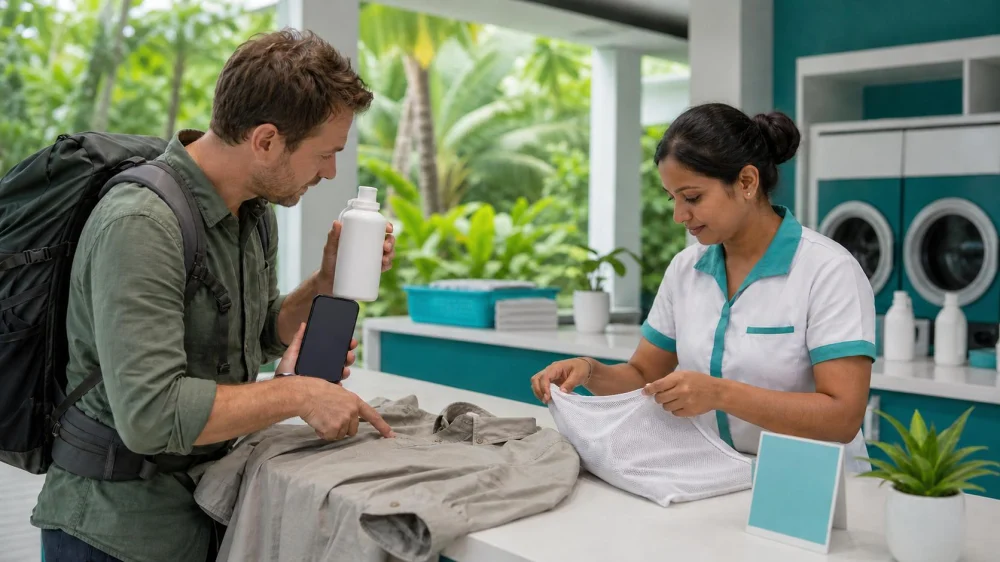
Insect Repellent on Travel Clothes: Check Before Washing
Insect repellent can reach collars, cuffs, socks, hats, outerwear, and bags through direct application or skin contact. The safest laundry method depends on the repellent label, garment care label, fabric, finish, and whether the item is factory-treated. Photograph both labels, separate contaminated pieces, ventilate them away from flames and children, and tell the Sigiriya laundry service exactly what product was used.
Quick answer
Stop spraying and move the garment to fresh air. Read the repellent’s directions and the clothing care label; do not assume all synthetic or water-resistant fabrics tolerate the same product. Keep the item separate from children’s clothing, food textiles, and unaffected laundry. Use only the approved detergent, temperature, cycle, and drying method. If the fabric becomes sticky, discoloured, brittle, or delaminated, stop and contact the product and garment manufacturers.
Identify the product
Photograph the front, active ingredient, concentration, directions, warnings, and lot information. Note whether it was a skin repellent, clothing treatment, aerosol, pump spray, lotion, wipe, or coil exposure. Different formulas contain different solvents and carriers.
Do not mix residues from unknown products or transfer repellent into an unlabelled container. If the original package is unavailable, tell the laundry that the product is unknown and avoid experimental stain removers.
Check the garment
Read fibre content and care symbols. Inspect colour, prints, reflective strips, elastic, coated rain fabric, waterproof membranes, faux leather, plastic accessories, eyewear, watches, and painted surfaces. Some repellent labels warn about particular synthetic materials or finishes.
Determine whether the item was factory-treated with an insect-control product. Treated garments may have special washing limits and should not be dry-cleaned, bleached, or ironed unless the label allows.
Separate and contain
Remove the item without rubbing it against skin or other clothing. Wash hands as the product directs. Place garments loosely in a dedicated washable bag for transport, keeping it away from food, medicines, and clean textiles.
Do not seal a wet or solvent-smelling item in luggage for long periods. Ventilate outdoors in shade where it cannot blow away, contact flame, or be reached by children or animals. Follow local disposal guidance for heavily contaminated or damaged items.
Test before treatment
When both labels allow cleaning, test the planned detergent and method on a hidden seam. Use a white cloth to check for dye or finish transfer. Do not scrub a visible area first or apply undiluted detergent, bleach, alcohol, acetone, or another solvent.
Document the original mark under neutral light. Stop if the test changes colour, sheen, texture, coating, print, adhesive, or water repellency.
Choose the wash method
Follow the stricter instructions when the repellent and garment labels differ, or contact manufacturers for clarification. Wash contaminated pieces separately or with similar workwear when directed, using the measured dose and sufficient rinse water.
Do not add extra heat or detergent to “cut” the residue. Avoid bleach, fabric softener, fragrance boosters, and stain sprays unless approved for both product and fabric. A second rinse may help only when the care guidance permits.
Protect treated clothing
Factory-treated clothing is designed to retain treatment for a stated number of washes. Keep a simple wash count and follow the label for detergent, machine cycle, drying, ironing, and end of effective life. Do not retreat it with a skin-only repellent.
If applying a clothing treatment yourself, follow the registered product label outdoors and allow complete drying before wear. The laundry should know it is treated so it does not combine the item with other customers’ textiles.
Dry and inspect
Use the care-label drying method. High heat can set stains, damage elastic or coatings, and increase odour. Air-dry in shade with airflow when permitted, ensuring the item is fully dry before packing.
Inspect for odour, oily feel, colour change, stiffness, peeling, seam-tape lift, or continued skin irritation. Do not wear a damaged or strongly contaminated garment against skin; seek manufacturer or professional advice.
Brief the laundry
Show the laundry both labels and the exact affected areas. Ask whether items are washed individually, which products and temperatures are used, how treated clothing is handled, and whether they can follow the required drying method.
Record the item count and condition at handoff. If the service cannot follow the labels, retain the garment for another provider rather than accepting a generic hot wash or dry-cleaning process.
Frequently asked questions
Can all repellent-stained clothes be machine washed?
No. Check both the repellent and garment instructions.
Should I use a solvent?
Not unless the relevant labels or manufacturer explicitly approve it.
Can treated clothing go with regular laundry?
Follow its label and tell the laundry service about the treatment.
What if the fabric turns sticky?
Stop cleaning and contact the product and garment manufacturers.
Next steps
Photograph both labels, isolate the garments, test a hidden area only when allowed, and choose the approved wash and dry method. Tell the Sigiriya laundry which product was used and retain any item the service cannot handle according to instructions.
After cleaning, save the service method with the garment record and inspect it again after the next wear. If skin irritation, breathing symptoms, or another suspected reaction occurs, remove the clothing, follow the product first-aid directions, and seek appropriate medical advice rather than repeating the wash experimentally.




 Laundry service3.0 (3 reviews)
 Super Clean Laundry4.0 (25 reviews)
 Wash Master4.0 (69 reviews)
 KARISHMAN QUICK WASH LAUNDRY4.0 (19 reviews)
 Moris Laundry0.0 (0 reviews)
 Kunam Loundry service5.0 (3 reviews)
 Effective Solutions for Clothes Not Drying Properly Indoors
 Tired of Yellow Stains on White Shirts? Discover the Best Solution
 Laundry Not Working the Way You Expect? Here's Why
 Effective Ways to Remove Yellow Stains from White Clothes | BrightCare Tips
 How to Treat Tea Stains on Travel Clothes
 How to Wash Wool Hats Without Distorting Them