
How to Treat Tea Stains on Travel Clothes
In this guide
Tea stains are not all the same. Plain black tea leaves a tannin-rich brown mark; milk tea adds protein and fat; sweet tea adds sugar that can become sticky and attract soil. A quick cool rinse and detergent treatment solve many washable-fabric stains, but heat should wait until the mark is gone.

Quick answer
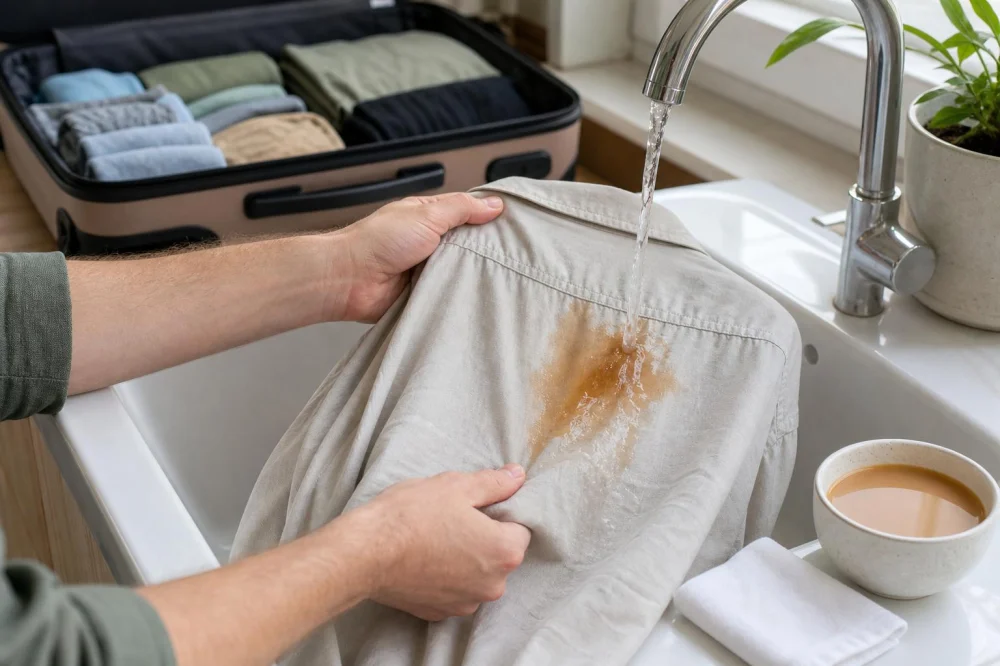
Blot the spill without rubbing, remove the garment if practical, and rinse cool water through the back of the stain. Work a small amount of liquid laundry detergent into a colourfast washable fabric, let it sit according to the product directions, then wash at the warmest temperature permitted by the care label. Air-dry and inspect. If the tea contained milk or cream, begin with cool water; hot water can make the protein component harder to remove.
Identify plain, milky, or sweet tea
Plain tea primarily leaves coloured plant compounds. Lemon may add acidity, while spices can add pigment. Milk, condensed milk, or cream introduces protein and oil. Sugar, syrup, honey, or sweetened condensed milk leaves a residue even when the visible colour seems faint.
Tell a laundry service what was in the drink. “Tea” is less useful than “black tea with milk and sugar” because treatment must address both tannin and food residue.
Also identify the fabric, colour, finish, and care label. Cotton, polyester, wool, silk, viscose, linen, elastane blends, and garment-dyed items do not tolerate identical products or handling.
Act on a fresh spill
Lift the cup and move away from electronics or hot liquid first. Blot with a clean white cloth or plain absorbent towel. Press from the outer edge toward the centre so the stain does not spread.
Do not scrub. Friction can push colour deeper, distort knit, roughen a delicate surface, or spread milk fat. Replace the blotting area as it absorbs liquid.
Remove any tea leaves or spices gently with a spoon. If the garment cannot be removed, place a dry towel behind the spot before blotting so moisture does not transfer to another layer.
Rinse from the back of the fabric
Hold a washable garment with the stained side facing down and run cool water through the back. The flow helps push residue out along the route it entered rather than driving it farther through the face.
Use cool water first for milk tea. For plain tea, cool or lukewarm water is a safe starting point until the care label and fabric are known. Avoid extremely hot water and high-pressure rubbing.
Do not flood a dry-clean-only garment, structured jacket, lined item, leather trim, unstable dye, or fabric that water-spots. Blot and take it to a professional cleaner promptly.
Pretreat washable clothing
Apply a small amount of liquid laundry detergent or a stain remover approved for the fabric and stain. Test an inconspicuous area when colourfastness is uncertain. Gently work from the back with fingers or a soft clean cloth rather than a hard brush.
Allow the product the contact time on its label; do not let it dry on the garment unless instructed. For milk tea, a detergent containing enzymes may help with protein, while surfactants address fat and sugar. Product suitability varies for wool and silk.
If a coloured trace remains on a washable colourfast item, an oxygen-based bleach soak may help when both garment and product labels permit. Measure and dilute exactly. Chlorine bleach can damage colour and fibres and is not interchangeable with oxygen bleach.
Wash according to the care label
Wash the garment separately or with compatible colours at the warmest temperature allowed by its care label and the stain-treatment product. Use a normal measured dose of detergent; excessive detergent can leave residue and does not guarantee better stain removal.
After the cycle, inspect the area while wet and again under good light. Do not place the garment in a dryer or press it with an iron if brown, yellow, oily, or sticky residue remains.
Air-dry after successful treatment until you are confident the mark is gone. Heat can make remaining food and colour harder to remove.
Handle a dried or set stain patiently
Rehydrate a washable stain with cool water, apply approved detergent, and allow more contact time. Rinse and repeat rather than using harsher force. A second treatment often works better than one overly concentrated treatment.
For colourfast washable fabric, an oxygen-bleach soak used exactly as directed may lift residual tannin. Keep unlike products separate and rinse thoroughly between treatments.
Old stains may include oxidation, sugar browning, prior heat, or fabric dye damage. If repeated label-safe treatment makes no progress, stop and consult a cleaner before the fabric is weakened.
Protect delicate and special-care fabrics
Wool and silk are protein fibres and can be damaged by some enzymes, alkalinity, agitation, bleach, and heat. Viscose can weaken and distort when wet. Linen can crease and some garment dyes can bleed.
Follow the care label. For dry-clean-only items, embroidered garments, saris, formalwear, tailored clothing, vintage textiles, and pieces with unknown dye stability, blot only and seek professional service.
Point out the stain, state its ingredients and age, and disclose any home treatment. Solvent, detergent, or bleach residue can affect the cleaner's plan.
Manage the stain while travelling
If full washing is not possible, blot, rinse a washable item with safe clean water, and keep it damp only briefly until treatment. A wet garment sealed in plastic in a warm bag can develop odour, dye transfer, or mildew.
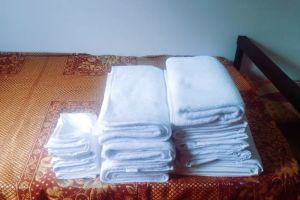
After rinsing, roll the item in a clean towel to remove moisture and hang it with air circulation. Keep it out of intense heat until the stain is evaluated. Do not use coloured hotel towels that may transfer dye.
For a laundry drop-off, empty pockets, fasten loose details, and identify the exact stained area. Ask about turnaround time before authorising treatment so the garment can dry fully before packing.
Avoid common stain-removal mistakes
- Do not rub with a coloured napkin that can transfer dye.
- Do not apply hot water first to tea containing milk.
- Do not dry or iron until all visible and oily residue is gone.
- Do not mix chlorine bleach with ammonia, acids, vinegar, or other cleaners.
- Do not use concentrated bleach on an unknown fabric or colour.
- Do not scrub wool, silk, embroidery, or unstable prints.
- Do not hide prior treatments from a professional cleaner.
Frequently asked questions
Does plain water remove a fresh tea stain?
A cool back-rinse can remove much of a fresh spill, but detergent may be needed for remaining tannin, sugar, milk, or oil.
Should I use hot water on black tea?
Start cool until the ingredients and fabric are known. Then use the warmest wash temperature allowed by the care label.
Can vinegar remove tea stains?
Acid is not universally safe or necessary. A labelled laundry detergent or stain remover is more predictable. Never combine vinegar with chlorine bleach.
Why did the stain reappear after drying?
Sugar, milk fat, or tannin may have remained deeper in the fibres and become more visible as moisture evaporated.
Can a laundry service guarantee removal?
No responsible cleaner can guarantee every stain without risking fabric or colour. Prompt, accurate information improves the treatment choices.
Remove the layers before adding heat
Treat tea as a layered stain: coloured tannin plus any milk, fat, sugar, lemon, or spice. Blot, cool-rinse from the back, pretreat with a fabric-safe product, wash by the care label, and inspect before heat. For delicate, structured, unstable, or valuable garments, prompt professional care is safer than increasingly aggressive home chemistry.




 Spin and Shine Laundry2.0 (5 reviews)
 Laundry Wash & Dry5.0 (2 reviews)
 land sale4.0 (1 reviews)
 Moris Laundry0.0 (0 reviews)
 Sarurshiya0.0 (0 reviews)
 Wash Hub Professional Laundry Service4.0 (55 reviews)
 How to Get Ink Stains Out of Clothes Without Bleach
 Are You Washing Your Clothes Too Often? Laundry Habits Explained
 Quick Ways to Remove Oil Stains From Wool Sweaters
 Laundry Doesn't Smell Fresh Enough? Causes and Easy Fixes That Actually Work
 Smart Laundry Tips for Small Apartments That Actually Work in 2026
 How to Wash Silk Blouses Without Stretching the Fabric