
Hiking Socks After Sigiriya: Wash, Rinse, and Dry Fully
On this page
Quick answer
After walking around Sigiriya, check each sock’s care label and fibre blend. Shake or brush off dry grit, pre-treat only with a compatible product, wash at the labelled temperature with a modest amount of detergent, rinse thoroughly, reshape, and air-dry with strong airflow unless the label permits a dryer. Pack only when the thick sole and cuff are completely dry.

Identify the fibre and condition
Hiking socks can combine merino wool, polyester, nylon, acrylic, elastane, or other fibres. The blend affects water temperature, detergent, agitation, and drying. Read the sewn or printed care label rather than relying on appearance. If the label is unreadable, use a conservative cool, gentle process and avoid heat until the manufacturer’s guidance can be found.
Inspect the heel, toe, ball, arch, cuff, and seams for thinning, holes, pulled threads, hardened dirt, blisters’ dressing residue, oil, or colour transfer. Separate a bleeding new sock from pale garments. Keep pairs together with a mesh bag when accepted by the laundry, but do not tie or roll dirty socks because trapped moisture and grit slow cleaning.
Prepare mud and stains
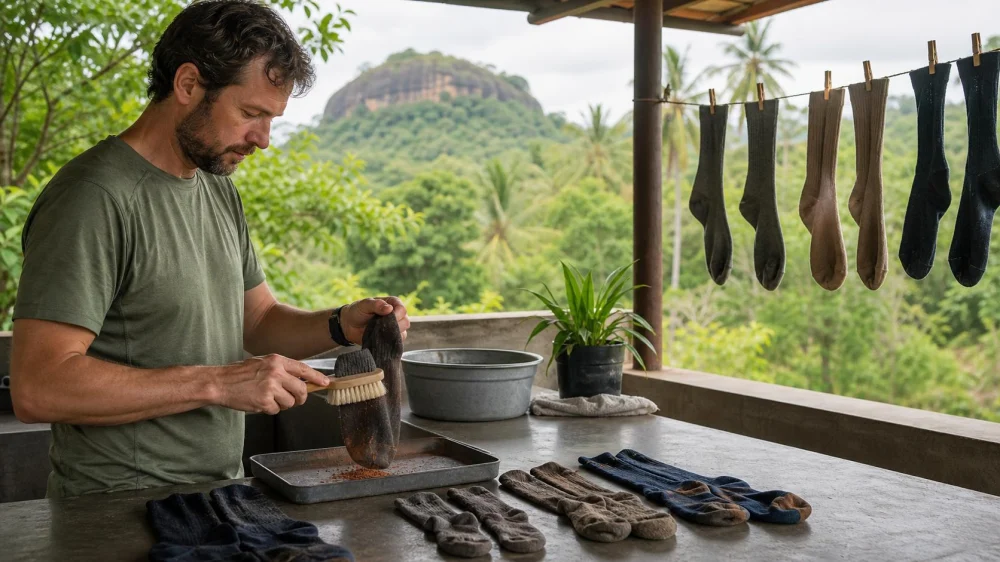
Let ordinary surface mud dry, then shake or softly brush it off outdoors in an appropriate place. Do not grind grit deeper into knit loops. For wet clay, remove excess gently without stretching the sock. Rinse only when the care label and stain type support it, and keep contaminated rinse water out of natural waterways.
Test any stain treatment on an inconspicuous area. Avoid chlorine bleach, aggressive brushing, and strong improvised mixtures unless the label specifically permits them. Heat can set some protein or organic stains. If a sock contacted fuel, pesticide, sewage, or another hazardous material, isolate it and seek product- or local-specific disposal and cleaning advice rather than adding it to ordinary laundry.
Wash without damaging fit
Turn socks according to the manufacturer’s direction; many benefit from inside-out washing because sweat, skin oils, and grit collect inside. Fasten unrelated hook-and-loop items and separate sharp zips that can snag knit. Use a gentle cycle or careful hand wash at the labelled temperature with detergent suitable for the fibre and machine.
More detergent does not make a small load cleaner. Excess can remain in dense cushioning and affect feel or odour. Do not use fabric softener when the manufacturer warns that it can coat fibres or change moisture management. Avoid prolonged soaking of wool or elastic unless approved, and do not wring or twist wet socks out of shape.
Rinse detergent completely
Rinse until water is clear and the fabric no longer feels slippery or heavily perfumed. Thick soles, compression zones, and cuffs retain suds, especially during hand washing. Press water out gently against a clean basin or in a clean towel rather than twisting the pair.
If residue remains after a service wash, request a plain compatible rinse before drying with heat. Adding another fragranced product can mask rather than remove residue. Travellers with sensitive skin should tell the laundry before handoff and ask whether shared machines, detergent dosing, and an extra rinse can meet their needs.
Dry through the cuff and sole
Reshape socks to their normal length and open the cuff so air reaches inside. Hang or lay them as the label recommends in a clean, covered, ventilated area. Turn thick socks partway through drying. Direct intense sun or high heat can fade colour, shrink wool, or weaken elastic, so follow the label and avoid a hot surface.
Feel the thick heel, toe, and sole rather than judging only the outside. In Sigiriya’s humid or rainy conditions, these zones may remain damp after thin clothes feel dry. Do not seal damp socks in footwear, plastic, or tightly packed luggage. Extend drying, use safe room airflow, or carry them separately in a breathable arrangement.
Give clear laundry instructions
Count pairs and identify fibre type, stains, preferred wash, fragrance needs, and whether machine drying is allowed. Ask if socks will be mixed with towels or other customers’ loads and whether small items are placed in a labelled mesh bag. Confirm per-piece or weight pricing, turnaround, and the rain plan.
At pickup, match every pair and check odour, residue, shrinkage, elastic, seams, and dryness. A missing single sock is easier to trace immediately than after departure. Photograph and report a problem before re-washing, heating, or wearing the item, and retain the order receipt.
Frequently asked questions
Can merino hiking socks go in a dryer?
Only if the specific care label allows it, and only at the stated setting. Many blends require low heat or air drying.
Should I wash muddy socks immediately?
Remove or dry-brush excess grit first when appropriate, then follow the label. Do not let damp socks remain sealed for days.
Why do clean socks still feel slippery?
Detergent or softener residue may remain in dense fibres. A compatible extra rinse can help.
Evidence and limitations
This guide uses standard textile-care principles: identify fibres, remove loose soil, use label-compatible detergent and temperature, avoid unnecessary heat, rinse dense fabric well, and dry completely. Exact instructions differ by brand, blend, finish, contamination, and laundry equipment. The garment label and manufacturer’s current advice take priority.
Conclusion and next steps
After the walk, unroll and inspect each pair, remove loose grit, and group socks by care needs. Give a Sigiriya laundry the label-based wash and drying instructions or use a careful gentle process yourself. Verify the thick sections are clean, residue-free, and fully dry before the next hike or luggage transfer.




 University Laundry0.0 (0 reviews)
 Fresh and Clean Laundry4.0 (29 reviews)
 Wash Master4.0 (69 reviews)
 Yogan stores & Laundry Service4.0 (43 reviews)
 Laundry Hut4.0 (13 reviews)
 Kleen Laundry5.0 (74 reviews)
 Clothes Not Drying Even After Hours? Try This Practical Solution
 How to Wash Hoodies With Fleece Lining Correctly
 How to Remove Mold Smell from Clothes Easily
 What’s the Best Way to Sort Laundry to Avoid Color Bleeding
 How to Wash Wool Hats Without Distorting Them
 Tips for Washing Cotton Towels So They Stay Soft