
Laundry Color Transfer: Separate, Avoid Heat, and Report
On this page
Quick answer
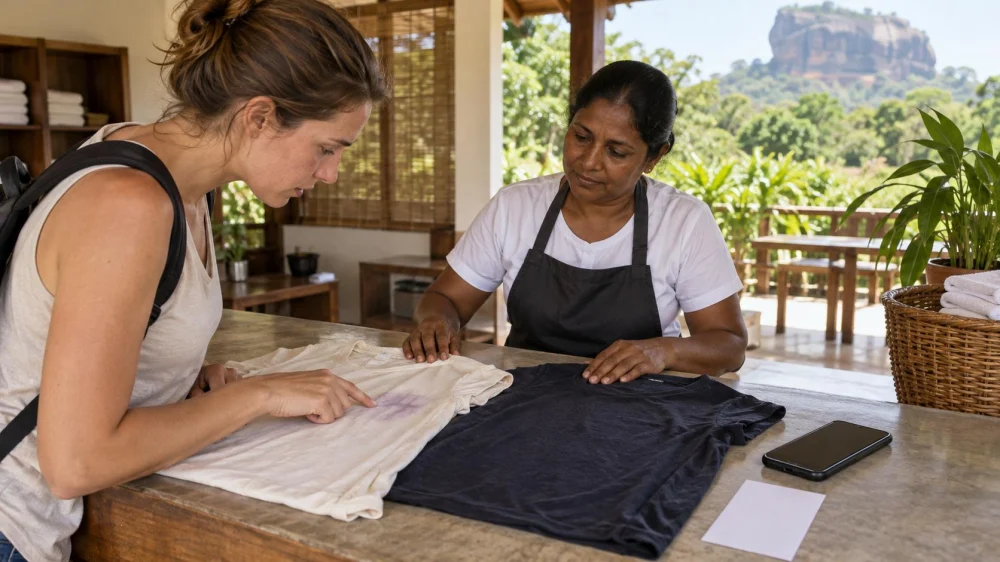
If colour has transferred between garments, separate the affected items, keep them away from heat, and photograph the staining and care labels. Do not dry, iron, bleach, or apply a home remedy until fibre, dye, trim, and label limits are reviewed. Contact the laundry promptly with the receipt, item count, and photos, then agree on any rewash or specialist treatment.

Act when you notice transfer
Check the item in neutral light and compare it with pre-service photos. Separate the suspected dye source and affected garments so damp contact does not continue. Keep each item in a clean breathable place unless the service gives different safe instructions.
Avoid tumble drying, ironing, direct sun, or other heat while the next step is decided. Heat and time can make some colour changes harder to address.

FASHION DRY CLEAN - LAUNDRY MART
176 Ambagamuwa Road, Gampola 20500, Sri Lanka
Recheck every care label
Photograph the washing, bleaching, drying, ironing, and professional-care instructions for both the affected item and suspected source. Note fibre content, coloured trim, prints, coatings, and warnings such as wash separately or with like colours.
Do not assume a white garment permits chlorine bleach. The fibre, finish, stitching, print, and label all matter.
Report it to the laundry
Contact the provider before another wash. Send the receipt number, item descriptions, collection time, pre- and post-service photos, care labels, and the location of transfer. Ask how the load was sorted and processed.
Request a written proposed remedy, risks, timing, cost, and responsibility. Keep the packaging and do not surrender the item without a new itemised receipt.
Choose a cautious treatment
The safest response depends on fibre, original dye, transferred dye, water temperature, detergent, drying, and prior treatments. A professional may recommend a controlled rewash or colour-run product only after checking compatibility.
Test an approved method in a hidden area when the instructions allow. Stop if the original colour lifts, trim changes, fabric weakens, or the transferred area spreads.
Reduce future mixing risk
Separate whites, lights, darks, saturated new items, and garments labelled for separate washing. Turn over every pocket and unfold bundled clothing so items are counted and sorted individually.
Record new or strongly coloured items at handoff and ask the service how it tests uncertain dyes. Colour-catcher products are not a substitute for correct sorting or label compliance.
Important limits
Do not mix bleach, ammonia, acids, solvents, stain removers, or unknown laundry chemicals. Avoid treatment on valuable, historic, hand-dyed, embroidered, coated, structured, or mixed-material items without specialist advice. For chemical exposure or fumes, move to safety and contact the appropriate medical or poison service.
Frequently asked questions
Should I dry the item before returning it?
Avoid heat. Ask the laundry how to preserve the item safely for inspection.
Can I use chlorine bleach on white fabric?
Only if the complete care label and material permit it. White appearance alone is not enough.
Will another wash always remove transfer?
No. Results depend on the dyes, fibres, heat history, and treatment.
What evidence should I keep?
Keep labels, before-and-after photos, receipts, messages, item counts, and written treatment proposals.
Sources and evidence notes
GINETEX's care symbol guidance explains washing, bleaching, drying, ironing, and professional-care limits. The garment manufacturer's label and the service's documented process should guide the specific response.
Next steps
Separate the items, avoid heat, photograph the change and labels, and contact the laundry. Approve a rewash or specialist treatment only after its compatibility and risks are clear.





 City Laundry Rambukkana5.0 (4 reviews)
 FASHION DRY CLEAN - LAUNDRY MART4.0 (1 reviews)
 Wash Mart3.0 (13 reviews)
 Laundry4.0 (20 reviews)
 Laundry service nilaveli4.0 (2 reviews)
 ECO Clean Laundry Service & Tuk Tuk service Nilaveli4.0 (56 reviews)
 Laundry Color Transfer: Separate, Avoid Heat, and Report
 Laundry Care Label: Photograph Symbols and Confirm Instructions
 Laundry Drying Time in Humid Weather: What to Ask
 Laundry Detergent Residue: Questions Before a Rewash
 Laundry Pickup Window: Timing, Contact, and Missed Handoff
 Laundry Service Delicate Item: Confirm Method and Risk