
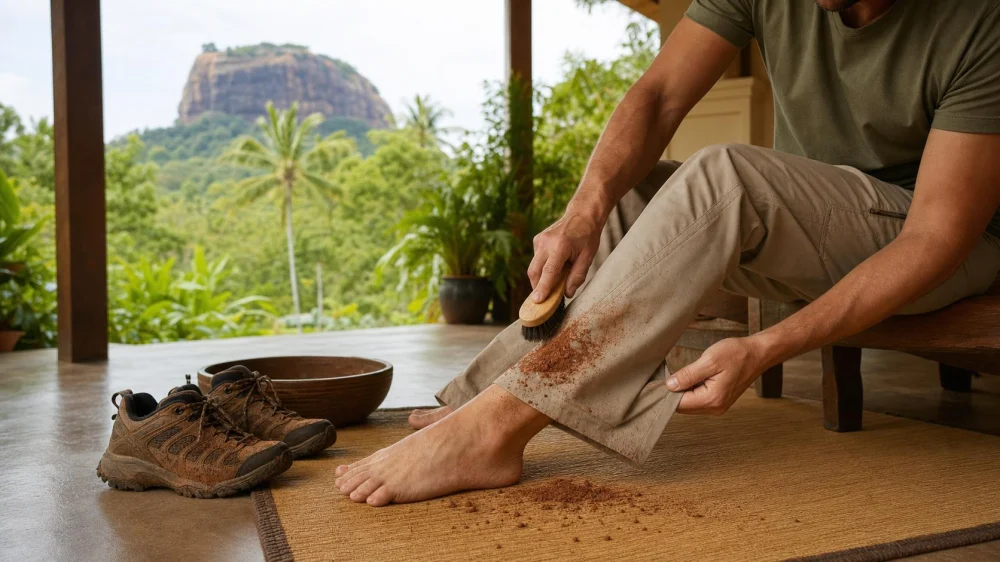
How to Handle Red Mud Stains After a Sigiriya Outing
On this page
Quick answer
Let ordinary mud dry, then gently brush or scrape away loose soil outdoors before adding water. Check the care label, rinse washable fabric from the back with cool water, pretreat using a compatible laundry detergent or stain product, and wash as directed. Air-dry and inspect before ironing or tumble-drying. For silk, wool, structured garments, unstable dyes, or valuable clothing, use a professional laundry or cleaner.
A mud stain combines removable soil particles with moisture and sometimes iron-rich mineral pigments or organic matter that can remain bound to fibres.

Why mud needs two stages
Wet rubbing can push gritty particles deeper and spread the mark. Removing dry soil first reduces the material that cleaning must lift. The remaining discoloration then needs label-compatible wet treatment.
Red or orange earth can leave mineral pigment after the visible mud is gone. Repeated gentle treatment is safer than immediately using strong bleach.
First steps
- Keep the garment separate from clean luggage and upholstery.
- Allow ordinary surface mud to dry in ventilation, away from direct heat.
- Outdoors, gently shake, brush, or lift dry soil without grinding it into the fabric.
- Read the care label and test any product on a hidden area.
- For washable fabric, rinse from the reverse side with cool water.
If the material may contain sewage, chemicals, animal waste, blood, or another biological hazard, avoid handling it like routine mud; isolate it and seek appropriate professional advice.
Washing sequence
- Apply a small amount of fabric-compatible liquid detergent or labelled stain remover.
- Allow only the stated contact time and do not let the product dry unless directed.
- Wash with similar colours at the temperature allowed by the garment.
- Inspect the damp item in good light.
- Repeat a compatible treatment if pigment remains.
- Air-dry until the stain is gone; heat can make remaining discoloration harder to remove.
What to tell a laundry service
Show the staff every affected area and explain where the mud came from, when it happened, fabric type, and any detergent, soap, bleach, or stain product already used. Ask whether stain treatment is included and whether the item can be returned without machine drying for inspection.
For travellers in Sigiriya, count items and photograph important garments before drop-off. Confirm collection time, pricing basis, delicate-item handling, and what happens if the stain cannot be safely removed.
What to avoid
- Do not scrub wet grit aggressively.
- Do not iron or tumble-dry while a mark remains.
- Do not use chlorine bleach unless both garment and product directions allow it.
- Never mix bleach with acids, vinegar, ammonia, or other cleaners.
- Do not treat leather, suede, silk, wool, or structured garments with a generic soak.
- Do not shake dusty clothing indoors where particles can spread.
Limitations and important notes
Soil composition, fabric, dye, prior heat, and time affect removal. Mineral-rich stains may not disappear completely without risking colour or fibre damage.
Follow product labels, use ventilation, wash hands after handling soiled clothing, and keep cleaners away from children. A professional should set realistic expectations rather than guarantee removal.
Frequently asked questions
Should I wash mud while it is still wet?
For ordinary mud, letting it dry and removing loose soil first usually prevents spreading. Handle hazardous contamination differently.
Can I use hot water on red soil?
Use only the care-label temperature. Cool rinsing is a cautious first step, and heat should wait until the mark is gone.
Why is an orange shadow left after washing?
Fine mineral pigment may remain after soil particles are removed. Repeat a compatible treatment or consult a cleaner rather than escalating randomly.
Can white shoes be treated the same way?
No. Shoes contain adhesives, foam, leather, coatings, and mixed materials. Follow manufacturer instructions or use a specialist.
Sources and evidence notes
This guide follows general textile-care practice: separate soiled items, remove loose dry soil, follow care labels, rinse and pretreat washable fabric, inspect before heat, and never mix cleaning chemicals.
Next steps
Let routine mud dry, brush it away outdoors, rinse from the back, and use a label-compatible treatment. Air-dry before judging the result, and disclose every prior treatment to a Sigiriya laundry professional.






 Fresh and Clean Laundry4.0 (29 reviews)
 Clean Wash Laundry Service3.0 (9 reviews)
 University Laundry0.0 (0 reviews)
 Central Cleaners4.0 (21 reviews)
 Super Clean Laundry Services4.0 (48 reviews)
 Queens Laundry - Gatambe3.0 (128 reviews)
 How to Remove Ink Stains From Cotton Clothing at Home
 Why Your Washing Clothes but Still Not Clean Problem Keeps Happening
 How to Wash Cotton Shirts to Keep Them Crisp and Fresh
 Laundry Not Smelling Good? Fix It Now With Proven Cleaning Solutions
 Clothes Not Drying Even After Hours? Try This Practical Solution
 How to Remove Ink Stains From Synthetic Fabrics Easily