
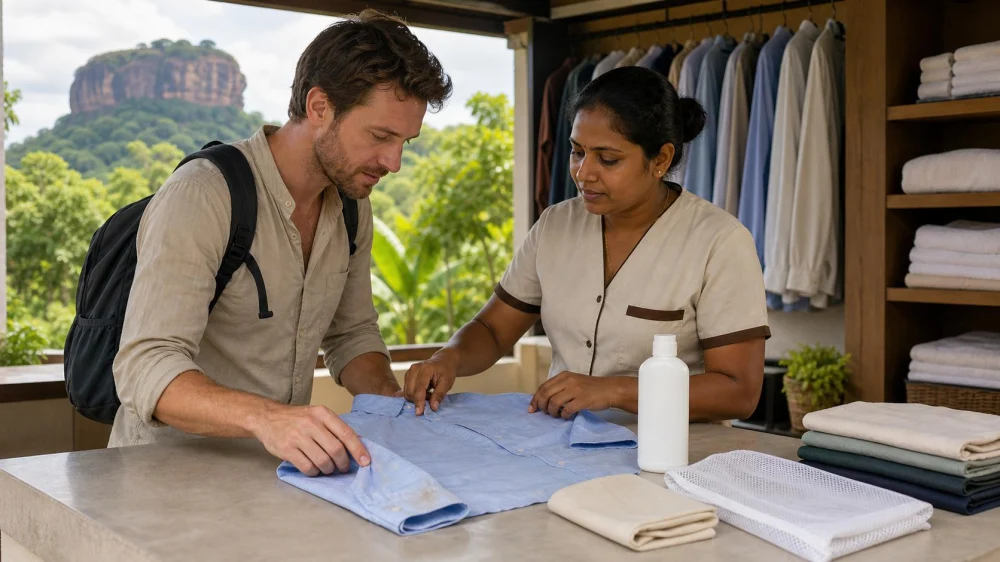
Sunscreen on Travel Clothes: Blot, Disclose, and Wash
On this page
Quick answer
Remove the garment when practical and blot excess sunscreen without spreading it. Check the care label, keep the item separate, and photograph both the mark and sunscreen container or ingredient list. Tell the laundry when it happened and what you already tried. Confirm pre-treatment, color separation, wash and drying method, price, turnaround, and inspection before repacking.

Why sunscreen marks need product and fabric details
Sunscreens can combine oils, emulsifiers, pigments, filters, fragrance, and other ingredients, while travel garments may contain stretch fibers, coatings, dyes, prints, or delicate trims. A greasy-looking mark can collect soil or change after water, detergent, bleach, heat, or ironing. The product name, garment label, elapsed time, and prior attempts help a laundry choose a cautious process without promising a perfect result.
This guide is for travelers arranging laundry in Sigiriya, Sri Lanka. It does not evaluate sunscreen safety, prescribe a stain-removal formula, guarantee removal, approve bleach or solvents, or override the garment label and laundry inspection. Products, fabrics, dyes, finishes, equipment, water, weather, and service policies differ.

Ceylon Organic Batik (Natural )
damunumullaMataleCentral Province
QHC9+37G, Kalawewa - Galewela Rd, damunumulla, Sri Lanka
Practical checklist
- Garment count, owner, hotel or pickup location, contact method, receipt or bag number, return deadline, delivery arrangement, and payment status.
- Fiber content, complete care label, garment color, stretch, coating, waterproof finish, lining, print, embroidery, trim, fasteners, and existing damage.
- Sunscreen brand and product type if known, ingredient photo, tinted or untinted formula, spray or lotion, and any insect repellent, makeup, body oil, sand, soil, pool water, or seawater mixed with it.
- Time and location of the mark, whether it dried, and every action already taken: blotting, rinsing, rubbing, soaking, wipes, soap, hotel shampoo, spot remover, bleach, sanitizer, machine washing, tumble drying, or ironing.
- The service's inspection, spot test, pre-treatment, detergent, bleach or oxidizer policy, wash temperature, load separation, rinsing, pressing, and approval process for a method change.
- Machine or hand wash, spin, tumble or line drying, sun or shade exposure, airflow, weather backup, and restrictions for elastic, coatings, dyes, or prints.
- Quoted price, stain-treatment charge, minimum order, same-day cutoff, realistic drying time, delivery fee, contact for delays, and claim or re-cleaning policy.
- Expected outcome, acceptable remaining shadow, stop point if color or texture changes, and what information the laundry will provide if another treatment is considered.
Step-by-step plan
- Blot visible excess with a clean plain material when that can be done without rubbing or spreading. Do not mix improvised chemicals, and do not apply heat to speed the process.
- Check and photograph the full care label. Photograph the garment, mark, surrounding fabric, delicate details, and existing wear in neutral light before packing it separately from clean clothes.
- Keep the sunscreen container or take clear photos of its front, back, and ingredient list. Record the approximate time, other substances involved, and every product or process already tried.
- At handoff, point to each affected area and provide the concise history. Ask the laundry to inspect the fabric and label before accepting a treatment or outcome expectation.
- Agree on pre-treatment, color separation, wash temperature, detergent, use or avoidance of bleach, drying, pressing, price, turnaround, and permission required before any change.
- Keep the itemized receipt and photographs. For pickup or delivery, confirm the collector, bag count, phone number, destination, payment, and a recorded handoff.
- At return, count every item and inspect the treated area, color, texture, elasticity, coating, print, seams, odor, dampness, and pressing before leaving or acknowledging delivery.
- If a shadow remains, ask what treatment was used and whether another attempt could affect the fabric. Dry the garment fully according to its label before placing it back in luggage.
Keep photos of the care label, sunscreen container and ingredients, garment and marks, existing damage, item count, incident time, previous attempts, agreed process, price, receipt, messages, delivery record, and return condition until the order is resolved.
Limits and important notes
No single stain method suits every sunscreen and fabric. Repeated treatment can fade dye, weaken stretch, alter waterproof or wicking finishes, affect prints, leave rings, or change texture. A spot test narrows uncertainty but cannot guarantee the whole garment, and a remaining mark may be safer than stronger treatment on a valuable or delicate item.
Treat clothing exposed to an unknown chemical, fuel, pesticide concentrate, sewage, sharp object, or body fluid as a separate safety issue rather than routine sunscreen laundry. Isolate it, avoid mixing products, and follow local disposal or professional guidance. For significant skin or eye exposure, breathing trouble, poisoning concerns, or other urgent symptoms, seek suitable local medical or emergency help.
Frequently asked questions
Should I scrub sunscreen with hotel soap?
Not by default. Scrubbing can spread residue or abrade fabric, and an unknown soap may complicate later treatment. Blot excess, check the label, document the product, and ask the laundry.
Why bring the sunscreen ingredient photo?
It gives the cleaner better context about oils, pigments, and other components without requiring you to identify the stain chemistry yourself.
Can white and colored garments be washed together?
Do not assume so. Inventory them in one order if needed, then confirm how the laundry will sort by color, label, fabric, soil, and treatment.
Does hotter water always remove oily marks better?
No. The garment label, dye, finish, stretch, product, and previous heat exposure matter. Confirm the chosen temperature with the laundry.
What if sunscreen is on swimwear?
Tell the laundry about chlorine, saltwater, sand, and the garment's elastic or print. The label and fabric may require gentler washing, rinsing, and drying.
Can I pack the item immediately after return?
Only if it is fully dry and the condition is acceptable. Open packaging, check seams and thicker areas, and air the garment according to its label before sealing luggage.
Sources and evidence
Start with the garment manufacturer's care label and the sunscreen container for item-specific information. General reference points include GINETEX explanations of textile care symbols and the chosen laundry's current written terms for sorting, stain treatment, drying, delays, and claims. Confirm local weather, turnaround, and service capability at the actual handoff rather than relying on a universal stain recipe.
Conclusion and next steps
Blot without rubbing, separate the item, and document the garment label, sunscreen product, mark, and earlier attempts. Give that record to the laundry, agree on treatment and stop limits, and keep the receipt. Inspect the returned fabric and dry it completely before repacking; if a mark remains, learn what was used before approving another attempt.





 Kani loundry4.0 (39 reviews)
 Sigiri Super Shine Laundry5.0 (6 reviews)
 Yogan stores & Laundry Service4.0 (43 reviews)
 Romantic laundry outlet5.0 (1 reviews)
 Jashvin’s Laundry Service4.0 (91 reviews)
 Hiru(හිරු) Laundry Sigiriya5.0 (3 reviews)
 Why Do Clothes Feel Sticky After Using Softener? Causes and Solutions
 Why Does My Laundry Smell Worse After Sitting Too Long and How to Fix It
 How to Wash Hoodies With Fleece Lining Safely
 How to Treat Curry and Coconut Oil Stains on Clothes
 Clothes Losing Softness? Simple Tips to Restore Fabric Comfort
 Laundry Doesn't Smell Fresh Enough? Causes and Easy Fixes That Actually Work