
Wash Permethrin-Treated Travel Clothing Without Guessing
On this page
- Quick answer
- Identify how the garment was treated
- Save both clothing and pesticide labels
- Wash treated clothing separately
- Set the washer from the label
- Hand-wash only when permitted
- Dry within the approved limits
- Brief a laundry service clearly
- Track the protection lifespan
- Handle exposure or damage concerns
- Travel laundry checklist
- Official repellent sources
- Conclusion and next steps
Quick answer
First identify whether clothing was factory treated with permethrin or treated later with a product. Follow the garment care label and the pesticide or treatment label together, using the stricter compatible instruction. EPA guidance says permethrin-treated clothing should be washed separately from untreated clothing. Record each wash because protection lasts only for the label's stated number of washings. Never apply permethrin directly to skin, never improvise retreatment, and tell a laundry service in writing that the load contains insecticide-treated garments.
This guide covers permethrin-treated outer clothing, not ordinary skin repellent on fabric. Product labels control use, washing, drying, and retreatment.
Identify how the garment was treated
Factory-treated clothing usually has a sewn label or hangtag stating the active ingredient, registration information, protection claim, wash limit, and care directions.
Self-treated clothing depends on the exact spray product and application date. Keep the original container and label rather than transferring product to an unmarked bottle.
If the treatment is unknown, do not guess. Contact the garment maker or product registrant with photos and purchase details.

ECO Clean Laundry Service & Tuk Tuk service Nilaveli
NilaveliTrincomaleeEastern Province
Fathah road, Nilaveli 31010, Sri Lanka
Save both clothing and pesticide labels
Photograph the care label, treatment label, product directions, lot or registration details, and any wash-count box before travel.
Resolve conflicts before washing. One label may govern fabric temperature and drying, while the pesticide label governs separation, protective handling, and retreatment.
Do not cut out the treatment label. If it becomes unreadable, preserve a digital copy with the garment name.
Wash treated clothing separately
The EPA explains that small amounts of permethrin can come off in the wash and that labels instruct consumers to wash treated clothing separately from untreated clothing.
Use a dedicated load for compatible treated garments. Do not combine them with underwear, infant clothing, towels, bedding, food-service uniforms, or other items unless the label explicitly allows it.
Keep the sorting bag closed and clearly identified. Wash hands after handling travel laundry.
Set the washer from the label
Select water temperature, cycle, detergent, load size, and rinse according to the current garment and treatment directions. More heat or detergent is not automatically cleaner or safer.
Empty pockets, close fasteners, and separate by colour and fabric compatibility. Do not add bleach, softener, disinfectant, stain remover, or fragrance without checking approval.
Use a full, normal water cycle when directed rather than an ultra-low-water shortcut. Do not reuse wash water for handwashing or other clothing.
Hand-wash only when permitted
Check whether handwashing is allowed and where wastewater may legally enter a sanitary system. Do not wash treated clothing in a stream, lake, irrigation channel, or outdoor basin that drains to soil.
Wear any protective equipment required by the label, avoid splashing, and keep children and pets away. Use a dedicated basin only when the instructions permit.
Rinse and dry the basin as directed and wash hands with soap and water afterward.
Dry within the approved limits
Follow the garment and treatment instructions for tumble temperature, line drying, shade, ironing, and dry cleaning. High heat can damage some fabrics or treatments.
Dry garments completely before packing or wearing. In Sigiriya's humid conditions, allow extra airflow and time rather than sealing damp clothing in luggage.
Keep treated outerwear separate from food, toiletries, and children's items during drying and storage.
Brief a laundry service clearly
Ask whether the service can run a separate load, follow exact temperature and product limits, avoid prohibited additives, and return the garment without fragrance or pressing when required.
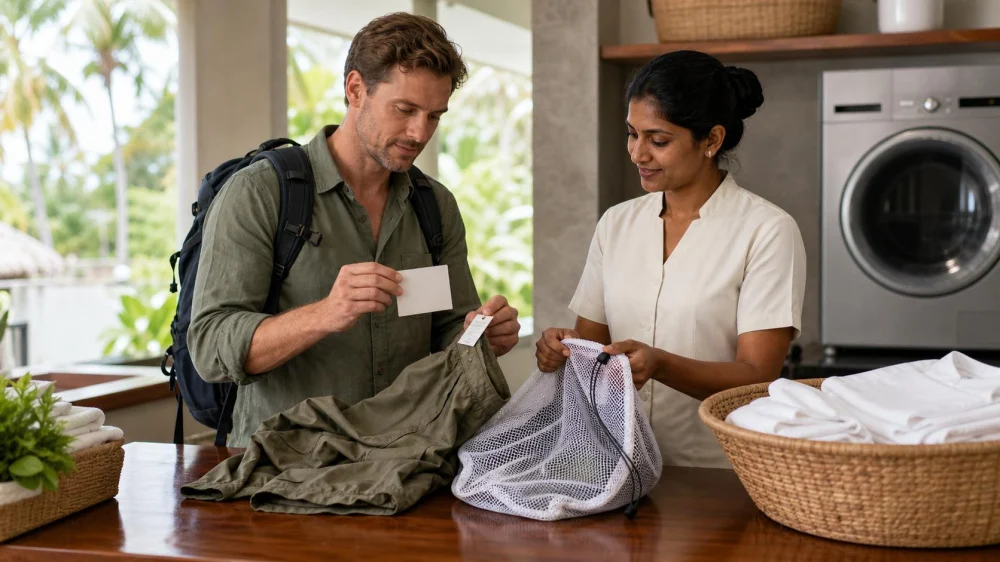
Provide a written list and photos of both labels. Count garments at handoff and request that no item be combined with another customer's load.
If the service cannot guarantee the directions, keep the item unwashed until a suitable method is available.
Track the protection lifespan
CDC notes that treated items can remain protective after multiple washings, but the product label states how long the protection lasts.
Record every complete wash and any dry-cleaning cycle. Do not reset the count after a light load or assume visible fabric condition proves repellent effectiveness.
Retreat only with a product registered and labelled for consumer treatment of that type of clothing, following every direction.
Handle exposure or damage concerns
Never apply permethrin clothing products directly to skin. Let freshly treated items dry completely before use as the label directs.
If a spill, eye contact, skin exposure, breathing problem, or ingestion occurs, follow the product first-aid label and contact local emergency or poison information services.
Stop using a garment whose treatment label is missing, fabric is damaged, or residue is unexpected until the manufacturer advises.
Travel laundry checklist
- Factory-treated or self-treated status identified
- Garment and pesticide labels photographed
- Treated load separated from untreated clothing
- Water, cycle, detergent, additives, and drying limits confirmed
- Sanitary wastewater route available
- Laundry service given written instructions
- Wash count updated after every cycle
- Retreatment performed only under a registered product label
Official repellent sources
The U.S. Environmental Protection Agency explains factory and consumer treatment, effectiveness, and separate washing on its repellent-treated clothing page.
The CDC says treated clothing and gear can protect after multiple washes, tells users to check the label for duration, and warns not to apply permethrin to skin; see CDC permethrin-treated clothing guidance.
Travellers should follow the product registered in their location and seek local medical advice for an exposure.
Conclusion and next steps
Permethrin-treated clothing needs label-led laundry, not a normal mixed travel load. Identify the treatment, save both labels, wash separately, control additives and temperature, and record every cycle. Give a laundry service the instructions before handoff. When treatment, wash history, or safety is uncertain, pause and contact the manufacturer instead of guessing.




 Quick & clean laundry2.0 (5 reviews)
 Clean Wash Laundry Service3.0 (9 reviews)
 Colombo Cleaners4.0 (18 reviews)
 Rajarata Washing Industries (Pvt) Ltd5.0 (3 reviews)
 LAUNDERETTE BY DOBI MASTER4.0 (371 reviews)
 Srimal electrical5.0 (1 reviews)
 Laundry Smell Doesn't Stay Fresh? Here's Why
 Laundry Not Working the Way You Expect? Here's Why
 How to Remove Ink Stains From Cotton Clothing at Home
 Tackle Laundry Overload With This Simple and Effective Plan
 Expert Advice on Washing Cotton Shirts Without Shrinking
 Why Clothes Often Feel Sticky After Drying and How to Fix It