
Zippered Travel Clothes: Inspect, Close, Protect, Wash, and Air-Dry
Table of contents
Quick answer
Read the garment's care label before washing. Empty pockets, remove grit from the zipper, check the slider and teeth, close standard zippers fully, secure loose pulls, and turn the garment inside out or use a mesh bag when the label permits. Choose the label's wash and dry method, avoid forcing a hot or gritty slider, and let the item dry completely before packing. Specialty waterproof or airtight zippers may require different instructions.

FASHION DRY CLEAN - LAUNDRY MART
176 Ambagamuwa Road, Gampola 20500, Sri Lanka
Inspect first
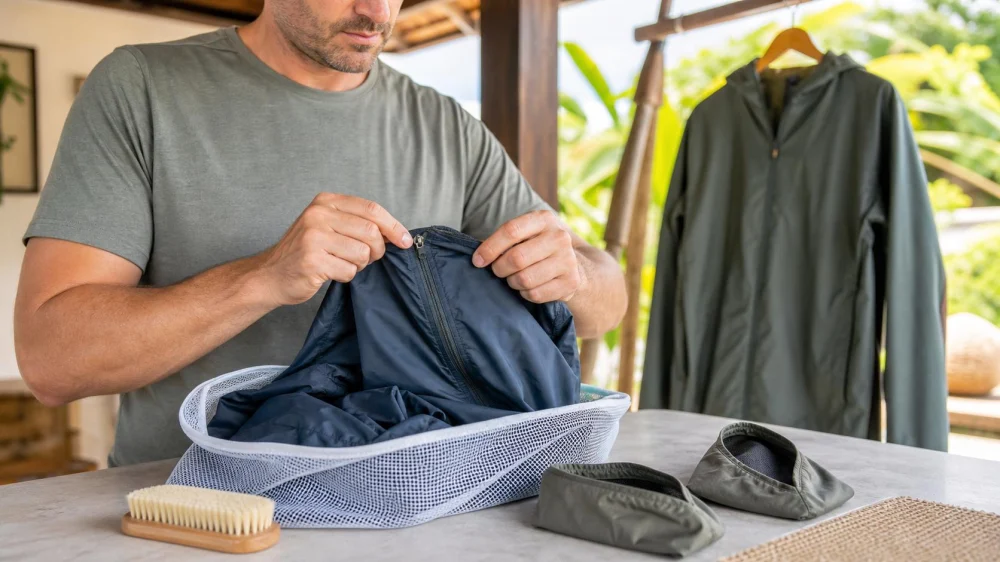
Lay the garment flat and move the slider gently. Look for trapped thread, sand, bent teeth, loose stitching, a damaged bottom box, or separating tape. Brush away dry grit before adding water. If the zipper already opens behind the slider or needs force, stop; washing may worsen the fault, so arrange repair first.
Read the entire care label, not just the water temperature. The shell fabric, lining, trim, coatings, printed details, elastic, and zipper must tolerate the chosen wash, drying, and ironing process.

Kunam Loundry service
No 31 lotus park road, aless garden, Trincomalee, Sri Lanka
Prepare the garment
- Empty every zip pocket and main compartment.
- Fasten hooks and snaps that reduce strain on the zipper.
- For an ordinary garment zipper, close it fully and lay the pull flat unless the product label says otherwise.
- Turn the garment inside out if instructed or if doing so safely shields hardware.
- Place delicate or small items in a mesh laundry bag.
- Wash separately if color transfer, snagging, or incompatible care settings are concerns.
Do not overfill the machine. Crowding increases twisting and impact, while a heavy zipper can strike delicate fabrics. Keep zippered jackets away from fine knits when snagging is likely.
Wash by the label
Select hand or machine washing, cycle, temperature, detergent, and bleach only as the label allows. Do not assume hot water or chlorine is safe. A mild process can protect both fabric and hardware, but “gentle” is not permission when the label calls for professional cleaning or forbids washing.
After rinsing, check for detergent or grit around the teeth. Do not aggressively scrub coated, concealed, or water-resistant zippers. Their tapes and films can have product-specific chemical and temperature limits.
Dry without distortion
Use the specified tumble setting or air-dry method. Reshape the garment and support its weight so a wet jacket does not stretch around the zipper tape. Keep metal hardware away from surfaces it may rust or mark. Before moving the slider after heat exposure, let the zipper cool to room temperature. Pack only when the garment, pocket linings, and zipper tape are fully dry.
Handle a stuck zipper
Do not yank the pull. Hold the fabric without twisting, check both sides for trapped thread or grit, and ease the slider back slightly. Manufacturer-approved zipper lubricant may help certain products, but oils and improvised products can stain fabric or harm coatings. For missing teeth, a broken pull, damaged stops, or persistent separation, use a repair service.
Checklist
- Care label photographed and understood.
- Pockets empty; sand, mud, and threads removed.
- Slider, teeth, stops, tape, and stitching inspected.
- Standard zipper fully closed unless its own instructions differ.
- Machine load leaves room and avoids snag-prone fabrics.
- Wash, bleach, dry, and iron settings match the label.
- Garment and zipper tape completely dry before packing.
Limitations
Zipper construction varies. Waterproof, airtight, coated, invisible, plastic, and metal products can require different positions, temperatures, chemicals, or professional service. Always follow the garment and zipper manufacturer's instructions. This guide cannot repair structural damage or verify that a travel laundry uses the requested settings.
FAQ
Should every zipper be closed for washing?
Many standard garment zippers should be closed, but specialty products may differ. The product-specific care instruction wins.
Can I tumble-dry a zippered jacket?
Only when the garment label allows it, using the stated temperature. Coatings and zipper parts may have lower heat limits.
Why use a mesh bag?
When allowed by the label, it can reduce snagging and impacts for small or delicate pieces; it does not change the permitted wash setting.
Can I force a zipper after washing?
No. Let it cool and dry, remove visible debris, and seek repair if gentle movement does not work.
Evidence notes
YKK's product guidance for standard coil zippers says to close the zipper before washing or related processing to reduce pressure and damage. The FTC also notes that garment care instructions should consider components such as zippers. Review the manufacturer's zipper care remarks, then follow the specific garment label.
Conclusion
Zipper care is mostly careful preparation: remove debris, inspect damage, close ordinary zippers, protect nearby fabric, and obey the full garment label. Gentle handling during washing and complete drying before packing help the slider, tape, and travel clothing work together for longer.





 ^MY SHOES " wash & clean0.0 (0 reviews)
 Srimal electrical5.0 (1 reviews)
 Red Rose Washing Hub🌹5.0 (4 reviews)
 Kleen Laundry5.0 (74 reviews)
 Sarurshiya0.0 (0 reviews)
 Kunam Loundry service5.0 (3 reviews)
 What’s the Best Way to Sort Laundry to Avoid Color Bleeding
 How to Remove Red Wine Stains From Upholstery: Effective Cleaning Methods
 How to Remove Mold Smell from Clothes Easily
 Why Your Washing Clothes but Still Not Clean Problem Keeps Happening
 How to Wash Hoodies With Fleece Lining Safely
 Clothes Not Drying Even After Hours? Try This Practical Solution