
How to Hand-Wash Travel Clothes Without Damaging Fabric
Table of contents
Quick answer
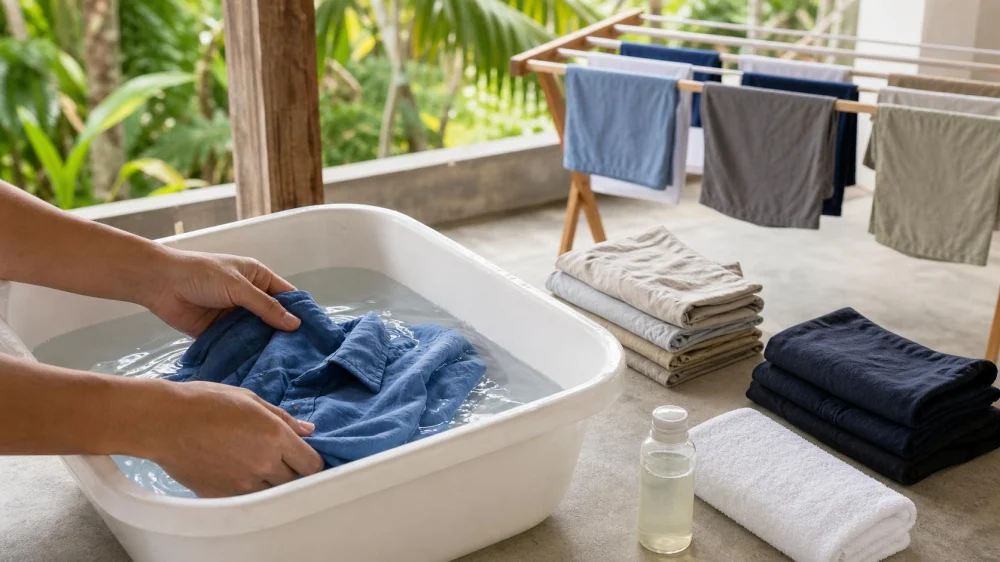
Read the care label, separate colors, and test uncertain dyes before hand-washing travel clothes. Use a clean basin, cool or lukewarm water, and a small amount of appropriate detergent. Gently squeeze suds through the fabric instead of scrubbing or twisting. Rinse until clear, press water out in a towel, reshape, and dry with generous airflow.
Check before washing
The care label is the first decision point. “Dry clean only,” “do not wash,” special drying symbols, and fiber-specific instructions outweigh a general travel method. If a favorite item is structured, embellished, lined, pleated, or unfamiliar, a professional laundry is often safer than experimenting in a hotel sink.
Empty pockets, close zippers, fasten hooks, and turn printed or dark garments inside out. Separate whites, pale colors, dark colors, and anything new that might release dye. Wash heavily soiled pieces separately from lightly worn clothing.

Laundry NNSH
PolonnaruwaNorth Central Province
W2R7+CH5 Aquatic Development Center, Maradankadawala-Habarana-Thirukkondaiadimadu Hwy, Polonnaruwa, Sri Lanka
Test uncertain colors
Dampen a hidden seam with the intended wash water and press it with a clean white cloth. Visible color transfer is a warning to stop, isolate the garment, and follow its label or seek professional advice. A spot test reduces risk but cannot guarantee that the entire garment is colorfast.
Inspect stains before adding water. Heat and friction can set or spread some stains, while aggressive spot treatment may remove color. Blot fresh spills and record what caused the mark so a laundry professional can choose a suitable treatment later.
Simple travel laundry supplies
- A clean sink, bucket, or collapsible basin
- A mild detergent suitable for the fabric
- A small measuring cap or spoon
- A white cloth for color testing and spot work
- A clean, absorbent towel
- Hangers or a travel line used where permitted
- A ventilated place away from dirty surfaces
Clean the basin before use and rinse away bathroom cleaners. Plug the drain only after the surface is clean. Avoid substituting shampoo, body wash, or dish liquid unless the garment manufacturer or product guidance supports it; these products may foam excessively, rinse poorly, or contain conditioners and fragrances not intended for clothing.
Step-by-step hand-washing method
- Sort a small load. Give clothes enough room to move. Keep contrasting colors apart.
- Fill the basin. Use the temperature shown on the care label. Cool water is a cautious default when the label permits washing but heat sensitivity or dye stability is uncertain.
- Dissolve detergent first. Add a small measured amount and mix it into the water before adding clothing. More foam does not mean more cleaning.
- Submerge and gently agitate. Press water through the garment and move it slowly through the basin. Avoid hard rubbing, stretching, or brushing.
- Give dirty zones focused attention. Gently squeeze the solution through collars, cuffs, and underarm areas. Do not grind two fabric surfaces together.
- Drain without twisting. Support the garment as it leaves the water, especially when wet fabric is heavy.
- Rinse thoroughly. Refill with clean water and gently press it through the fabric. Repeat until water is clear and the garment no longer feels slippery.
- Remove water carefully. Press against the basin, then roll the garment inside a dry towel. Do not wring.
- Reshape and dry. Smooth seams, restore the original shape, and follow the label’s flat-dry, line-dry, shade, or tumble-dry instruction.
Wash one or two days before the clothes are needed. In Sri Lanka’s humid conditions, dense waistbands, pockets, socks, and multilayer seams can remain damp long after the main fabric feels dry.
Adjust the method by fabric
Quick-dry synthetics
Many travel synthetics tolerate gentle hand-washing and release water readily, but printed finishes, elastic, and technical coatings still require label care. Avoid high heat unless specifically allowed. Rinse well because residual detergent can affect feel and comfort.

RAPID Laundromat (Pvt) Ltd
Santhi Kumar Mawatha, No. 29/8 Ampitiya Rd, Kandy 20000, Sri Lanka
Cotton and linen
These fibers can absorb substantial water and may become heavy. Support the garment during transfer and reshape it before drying. Cotton may shrink under heat; linen may crease sharply if twisted. A towel roll can shorten drying without harsh wringing.
Wool, silk, and delicate blends
Use only a label-approved product and minimal movement. Do not soak by habit, expose to sudden temperature changes, or hang a heavy knit that should dry flat. When the label is unclear, pause and use a qualified laundry service.
Sportswear and swimwear
Rinse promptly after sweat, chlorine, salt, or sunscreen exposure. Avoid fabric softener unless the manufacturer allows it, because it can change the performance of some moisture-managing or elastic materials.
Dry clothes in humid weather
Air movement matters as much as warmth. Hang items with space between them near a fan or in a ventilated room. Turn pockets out, open waistbands, and reposition garments midway through drying. Do not crowd damp pieces in a closed bathroom or pile them on furniture.
Follow hotel rules and avoid hanging laundry from sprinklers, lamps, balconies, or anything that could create a fire or fall hazard. Protect floors and wooden furniture from dripping water. Direct sun can speed drying but may fade color or conflict with the care label, so use shade for sensitive items.
Before packing, check thick seams, elastic bands, cuffs, and pockets by touch. If any area is cool or damp, continue drying. Packing moisture into a closed bag encourages odor and makes the next wash harder.
Mistakes and limits
- Using too much detergent: concentrated soap is difficult to rinse by hand and can leave a stiff or sticky feel.
- Wringing: twisting stresses fibers, seams, elastic, and garment shape.
- Mixing new dark clothes with pale items: travel is a poor time to discover unstable dye.
- Assuming hot water is more hygienic: excessive heat may shrink, fade, or damage clothing and does not replace proper detergent use and drying.
- Overloading a sink: clothes cannot move freely, soil redeposits, and rinsing becomes inefficient.
- Packing “almost dry” items: thick areas can hold moisture even when the surface feels dry.
Hand-washing is not the best solution for every item. Structured jackets, formalwear, leather, suede, large blankets, severe stains, and garments marked for professional cleaning should be handled according to their labels. If local water quality is uncertain, use water suitable for the task and a trusted laundry provider.
Hand-washing checklist
- Read every care label
- Empty pockets and close fasteners
- Separate whites, lights, darks, and unstable dyes
- Clean and rinse the basin
- Measure detergent conservatively
- Use label-approved water temperature
- Squeeze gently; do not scrub or wring
- Rinse until clear
- Towel-roll to remove excess water
- Reshape and provide strong airflow
- Confirm seams and pockets are dry before packing
Evidence behind the method
Care instructions are garment-specific because fibers, dyes, finishes, construction, and trim respond differently to washing and drying. In the United States, the Federal Trade Commission’s Care Labeling Rule requires covered textile garments to carry instructions for regular care and warnings when a procedure could harm the item. That makes the sewn-in label the strongest available starting point, even while traveling outside the United States.
The practical method above follows basic textile-care controls: limit unnecessary heat and mechanical stress, keep potential dye transfer separate, remove detergent through complete rinsing, and increase airflow during drying. These controls reduce avoidable damage but cannot reverse color loss, shrinkage, or a stain already set by an unsuitable earlier treatment.
Reference: U.S. Federal Trade Commission: Complying with the Care Labeling Rule.
Frequently asked questions
Can I wash all my travel clothes together?
No. Separate by color, soil level, fabric needs, and care instructions. New dark garments and anything that transfers color in a hidden-seam test should be washed alone.
How long should clothes soak?
Follow the detergent and garment instructions. Longer soaking is not automatically better and may increase dye loss or affect delicate fibers and trims. Gentle movement and proper rinsing are more useful than an arbitrary long soak.
Why do hand-washed clothes feel sticky?
The usual causes are excess detergent, an overloaded basin, or incomplete rinsing. Re-rinse in clean water and use less detergent next time. Very hard water and products not designed for laundry can also affect feel.
Is wringing faster than using a towel?
It may expel water quickly, but it can distort fabric and stress seams. Rolling the garment in an absorbent towel removes water with less twisting. Replace the towel or repeat if the item remains saturated.
When should I use a local laundry service?
Use professional help for large loads, limited drying time, complex stains, uncertain labels, structured clothing, or valuable garments. Explain known stains and special-care needs before the service begins.
Next steps
- Sort tonight’s load by label, color, and fabric weight.
- Test one hidden seam on any new or dark garment.
- Wash the quickest-drying essentials first.
- Set up a legal, ventilated drying area before clothes become wet.
- Use a trusted Sigiriya laundry service for anything outside the safe limits of hand-washing.




 Wash Master3.0 (125 reviews)
 LAUNDERETTE BY DOBI MASTER4.0 (371 reviews)
 Yogan stores & Laundry Service4.0 (43 reviews)
 Colombo Cleaners4.0 (18 reviews)
 ECO Clean Laundry Service & Tuk Tuk service Nilaveli4.0 (56 reviews)
 Saman cleaners3.0 (37 reviews)
 Why Are My Clothes Not Absorbing Water Properly and How to Fix It
 What’s the Best Way to Remove Food Stains Quickly
 How to Wash Hoodies With Fleece Lining Correctly
 Laundry Mistakes You Didn't Realize You're Making
 Clothes Not Drying Even After Hours? Try This Practical Solution
 What’s the Best Way to Sort Laundry to Avoid Color Bleeding