
Mud on Travel Trousers in Sigiriya: Dry, Brush, and Wash
Table of Contents
Quick answer
Check the trouser care label before treating mud. When the fabric allows, let thick surface mud dry, brush it off outdoors or over a container, then pretest a small amount of suitable laundry detergent on a hidden area. Wash at the permitted temperature, inspect while damp, and avoid a hot dryer or iron until the mark is gone. Ask a Sigiriya laundry service to note the stain before accepting the item.
Check fabric and soil
Mud can contain fine soil, plant material, oils, or coloured particles, while travel trousers may combine cotton, synthetic fibres, stretch panels, coatings, and trims. Read the full label for washing, bleaching, drying, and ironing symbols. Empty pockets and note any leather, reflective, glued, or water-resistant details.
If the material is labelled dry-clean only, contains a specialised finish, or is valuable, do not improvise. Show the stain to a professional cleaner and explain what happened, including any product already applied.
Let surface mud dry and brush
For ordinary washable trousers, trying to wipe thick wet mud can spread it deeper. Keep the item separate and allow the surface deposit to dry in a ventilated place away from cooking and clean clothes. Do not leave it wet and bundled for a long period.
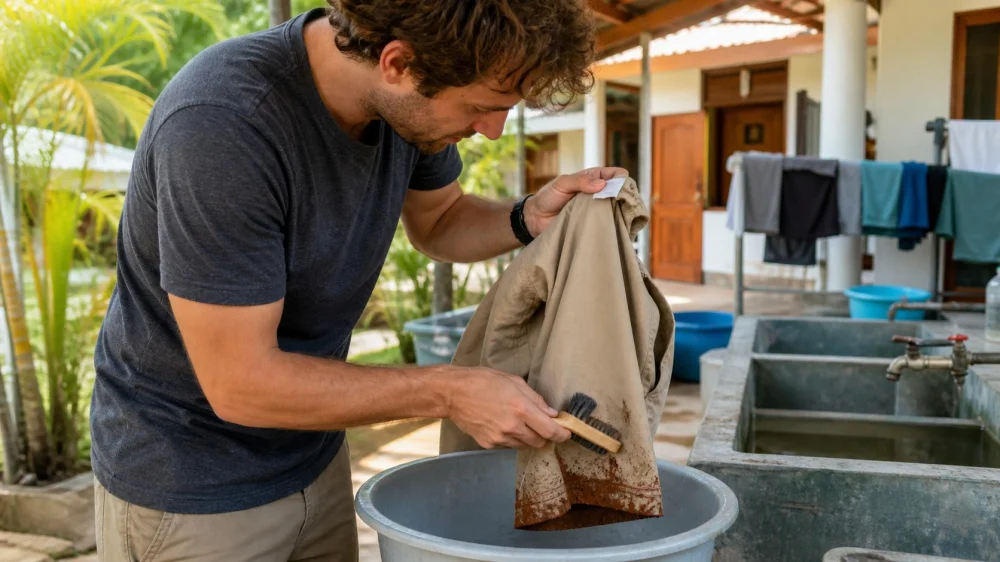
Once dry, take the garment outside or work over a basin or newspaper. Use a soft brush or the back of a clean spoon to lift loose soil without scraping aggressively. Brush from the cleaner area toward the heaviest deposit and avoid inhaling dust.
Test detergent first
Choose a detergent compatible with the care label. Test a diluted amount on a hidden seam, wait as directed, rinse, and check for colour or texture change. If safe, apply a small amount to the stained area and work it gently with fingers or a soft brush from the back where practical.
Do not mix detergents, bleach, stain removers, vinegar, ammonia, or other chemicals. Chlorine bleach can damage colour and some fibres. Follow the product dose and contact time rather than leaving a treatment on indefinitely.
Wash by the care label
Wash the trousers separately or with compatible colours while the stain is being evaluated. Use the permitted cycle and water temperature. More heat or detergent is not automatically better and may affect stretch, coatings, colour, or rinse quality.
For hand washing, dissolve the correct amount of detergent in clean water, agitate gently, and rinse until the water is clear and the fabric no longer feels soapy. Support wet fabric rather than twisting or wringing it unless the label allows that handling.
Use a local laundry service clearly
At a Sigiriya laundry service, point out every muddy area before the garment is counted or weighed. Ask whether pretreatment is included, whether the item will be washed with other colours, and which drying method is planned. Mention stretch, coating, or delicate trims.
Photograph the garment and care label, agree on the price and collection time, and keep the receipt. Ask the service to contact you before using bleach, strong solvent, high heat, or a different cleaning method.
Inspect before drying
Check the trousers in good light while they are still damp. A remaining shadow may be easier to treat again before heat. Do not iron or tumble-dry the stained area until satisfied, unless the care process requires professional handling.
Dry according to the label with airflow and enough space. Direct strong sun can affect some colours and finishes, so turn the garment as appropriate and remove it when dry. In humid conditions, do not pack it until seams, pockets, and waistband are fully dry.
Avoid common mistakes
- Do not rub thick wet mud across a larger area.
- Do not scrub delicate or coated fabric aggressively.
- Do not use an unknown chemical or unlabelled product.
- Do not mix stain-treatment chemicals.
- Do not apply a hot iron to a remaining mark.
- Do not pack trousers while damp.
Stop if colour lifts, the surface pills, a coating changes, or the stain spreads. Rinse away the treatment as the product directs and consult a professional cleaner.
Mud-stain checklist
- Read the care label and empty all pockets.
- Photograph the stain if using a service.
- Allow removable surface mud to dry safely.
- Brush loose soil gently over a container.
- Pretest a compatible detergent.
- Wash at the label-approved settings.
- Inspect the damp fabric in good light.
- Repeat mild treatment before using heat.
- Dry completely before packing.
FAQ
Should I wash mud immediately?
Remove any wet garment from contact with clean items, but for many washable fabrics, letting thick surface mud dry before brushing can reduce spreading. The care label and fabric condition still control the method.
Can I use hot water?
Only if the care label and treatment product allow it. Hot water may affect colour, stretch, finishes, or the stain.
What if a faint brown mark remains?
Do not add heat. Repeat a mild compatible treatment after testing, or ask a professional cleaner to assess it.
Can a laundry guarantee removal?
A responsible service may not guarantee every stain. Ask what method it proposes and what risks apply to the specific fabric.
Next steps
Separate the muddy trousers, read the label, remove dry surface soil, and test the mildest suitable treatment. If using a Sigiriya service, document the item and approve the cleaning and drying method. Inspect before heat and pack only when fully dry.
Evidence note: Fabric construction, dyes, finishes, and stain products differ. Garment and product instructions, plus a qualified cleaner's assessment, take priority.





 Jashvin’s Laundry Service4.0 (91 reviews)
 Laundry4.0 (20 reviews)
 Saman cleaners3.0 (37 reviews)
 Rinse Laundry4.0 (11 reviews)
 Super Clean Laundry Services4.0 (48 reviews)
 Senanayaka2.0 (17 reviews)
 How to Prevent Dye Transfer in a Mixed Travel Laundry Load
 How to Get Rid of Bad Odor from Laundry Naturally and Effectively
 How to Remove Tomato Ketchup Stains From White Shirts
 Easy Hacks to Remove Tomato Sauce Stains From White Cotton
 Common Laundry Problems and How to Solve Them Efficiently
 Laundry by Weight in Sri Lanka: Questions Before You Pay