
How to Wash Sweaty Hiking Clothes While Traveling
Table of contents
Quick answer
After a humid hike, remove wet clothing promptly, shake off loose dirt outdoors, and keep it ventilated instead of sealing it in luggage. Read each care label, separate colors and fabric types, then wash with the recommended temperature and a measured amount of detergent. Rinse well, avoid unapproved softener or high heat, and dry every seam completely before repacking.
What to do in the first hour
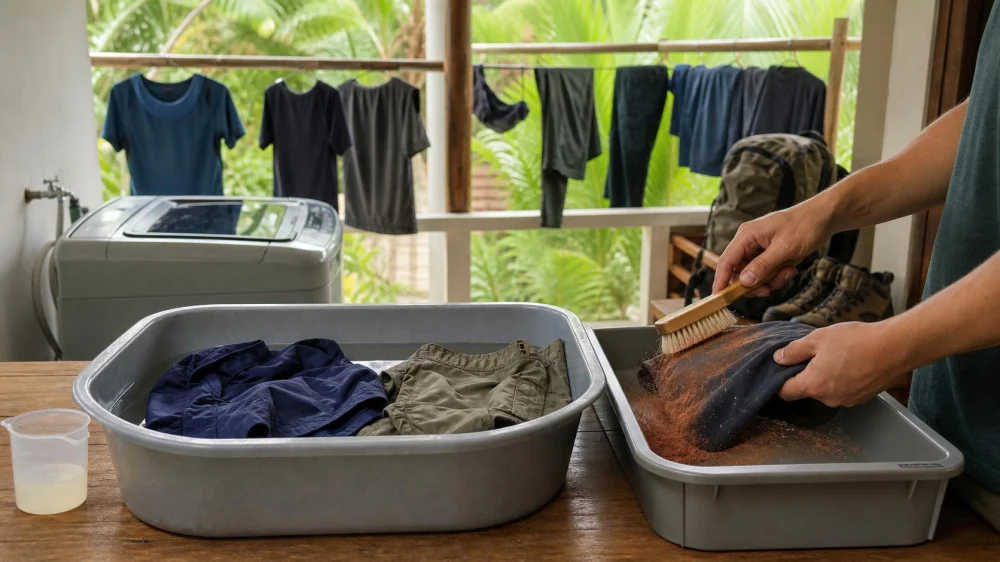
Sweat-soaked clothing needs airflow. When you return from a trail near Sigiriya, remove wet layers and hang them temporarily in a permitted, ventilated area. Do not compress them in a backpack, plastic bag, or closed laundry hamper while deciding what to wash.
Empty pockets and check for thorns, burrs, red soil, and loose debris. Shake or brush dry dirt off outdoors so it does not become mud in the wash water. If the clothing also has sunscreen, insect repellent, oil, blood, or plant sap on it, identify the mark before treatment. Different stains need different approaches.
Change into dry clothing and attend to your own hydration and comfort first. Laundry can wait briefly in open air; it should not remain bunched and wet.
Sort hiking clothes correctly
Separate dark and light colors, and keep lint-producing cotton towels away from smooth performance knits. Wash abrasive or heavily soiled trail pants apart from delicate base layers. Close hook-and-loop fasteners so they cannot snag other fabrics, close zippers, and turn printed or odor-prone garments inside out when their labels allow it.
Read the sewn-in care label on every item. A hiking outfit may combine polyester, merino wool, elastane, waterproof membranes, reflective trim, and bonded seams, each with different limits. The most sensitive component often determines the wash and drying method.
Do a quick color and damage check
Inspect stretched seams, torn mesh, loose reflective details, and unstable dye before washing. Repair or isolate anything likely to worsen in agitation. If a new dark item transfers color to a damp white cloth at a hidden seam, wash it alone.
A safe washing routine
- Choose the label-approved method. Use a machine cycle or hand-washing only when the garment instructions permit it.
- Use the stated water temperature. Cool water is a cautious choice for many mixed travel loads, but the label remains the authority.
- Measure detergent. Follow the product dose for load size and soil level. Extra detergent can be difficult to rinse and may leave residue.
- Allow movement. Do not pack a washer drum or basin tightly. Water and detergent must reach the fabric.
- Use gentle mechanical action. Avoid aggressive scrubbing and twisting, especially on stretch knits and wool blends.
- Rinse thoroughly. If hand-washing, change the water until it runs clear and the fabric no longer feels slippery.
- Remove water without wringing. Press gently or roll hand-washed items in a clean towel.
Wash sweaty clothing before adding fragrance products. Perfume may cover an odor temporarily but does not remove body soil. If an item still smells after a correct wash, repeat the process with a properly sized load and confirm the washing equipment itself is clean.
Protect performance fabrics
Technical clothing is not one universal category. Some moisture-managing fabrics, waterproof shells, insulated pieces, and merino blends need specialized detergent or a specific cycle. Follow both the garment label and the manufacturer’s product-care page when available.
Do not automatically add chlorine bleach, oxygen bleach, stain remover, or fabric softener. A product that is acceptable for a plain cotton shirt may affect stretch fibers, wool, water-repellent finishes, printed graphics, or membrane performance. Spot-test only where the maker permits it.
Waterproof and water-resistant layers
A shell that wets out, develops a persistent odor, or needs its water-repellent finish renewed may require a product-specific wash and reproofing process. Do not improvise with high heat. Follow the exact temperature and drying method from the garment brand, or ask a professional laundry familiar with outdoor clothing.
Dry completely in humid weather
After washing, reshape garments and provide space on all sides. Use a fan or a well-ventilated shaded area when the label allows air-drying. Turn pockets out, separate double-layer waistbands, and move thick cuffs so trapped moisture can escape.
Check the label before tumble-drying. High heat can affect elastane, bonded components, printed designs, and some finishes. If low heat is permitted, remove lightweight pieces as soon as they are dry rather than running them through a longer cycle needed by towels.
Before packing, feel under collars, inside pockets, along waistbands, and at reinforced seams. A surface can feel dry while a dense area is still damp. Keep incomplete items outside the suitcase and continue airflow.
Limits and common mistakes
- Sealing wet gear: a plastic bag contains moisture and odor; use it only for short transport when necessary, then unpack promptly.
- Overdosing detergent: residue can make clothing feel sticky and complicate rinsing.
- Using softener by default: some performance garments prohibit it.
- Mixing trail grit with delicate clothes: soil and abrasive fasteners can damage smoother fabrics.
- Applying strong stain products blindly: they may discolor fabric or affect finishes.
- Using heat to rush drying: a hair dryer, iron, radiator, or unapproved hot cycle can damage fibers and construction.
Professional care is sensible for severe contamination, valuable garments, difficult stains, insulated items, and clothing with damaged waterproof layers. Tell the laundry provider the fiber content, known stains, and any manufacturer restrictions.
Post-hike laundry checklist
- Ventilate sweaty clothes immediately
- Shake off dry soil outdoors
- Empty pockets and close snagging fasteners
- Separate colors, lint producers, and delicate performance items
- Read garment labels before choosing a cycle
- Measure an appropriate detergent
- Skip unapproved bleach and softener
- Rinse fully and avoid wringing
- Dry with generous airflow
- Check thick seams before repacking
Evidence and garment instructions
Reliable clothing care begins with the item’s permanent label. The U.S. Federal Trade Commission’s Care Labeling Rule requires covered garments sold in the United States to state a regular-care method and provide warnings when another expected procedure could cause harm. Those instructions reflect the complete garment—fiber, dye, trim, and construction—not just the fabric name.
This guide therefore avoids a single hot-water setting, soak time, chemical, or dryer temperature for all hiking clothes. The evidence-based control is to follow the specific care instruction, minimize unnecessary mechanical stress, dose detergent according to its directions, and verify complete drying before storage.
Reference: U.S. Federal Trade Commission: Complying with the Care Labeling Rule.
Frequently asked questions
Can sweaty hiking clothes wait until tomorrow?
If washing must wait, hang them separately with airflow instead of leaving them wet in a heap. Follow accommodation rules and keep damp laundry away from bedding, wood surfaces, and clean clothes.
Should I use hot water to remove sweat odor?
Not unless the care label and garment maker allow it. Heat may damage or shrink some hiking garments. Correct sorting, detergent dosing, adequate movement, thorough rinsing, and complete drying are safer starting points.
Can fabric softener improve the smell?
Check the label first. Some performance fabrics advise against softener because it may change wicking or finish behavior. Clean the garment rather than trying to cover residual odor with fragrance.
How do I handle red soil and sweat together?
Let loose soil dry and remove it outdoors before adding water. Then follow the care label and a stain method appropriate to the garment. Avoid hard scrubbing, which can drive grit into fabric and abrade fibers.
When is a local laundry service better?
Use one when you lack drying time, have a large load, cannot interpret the label, or own technical garments that need controlled treatment. Separate special items and explain all restrictions at drop-off.
Next steps
- Unpack today’s trail clothing and hang it with airflow.
- Photograph care labels if you may use a laundry service.
- Sort technical layers away from towels and rough garments.
- Wash only a load you can dry completely before checkout.
- Ask a trusted Sigiriya laundry provider about special-care items.




 Wash Master3.0 (125 reviews)
 LAUNDERETTE BY DOBI MASTER4.0 (371 reviews)
 Yogan stores & Laundry Service4.0 (43 reviews)
 Colombo Cleaners4.0 (18 reviews)
 ECO Clean Laundry Service & Tuk Tuk service Nilaveli4.0 (56 reviews)
 Saman cleaners3.0 (37 reviews)
 Why Are My Clothes Not Absorbing Water Properly and How to Fix It
 What’s the Best Way to Remove Food Stains Quickly
 How to Wash Hoodies With Fleece Lining Correctly
 Laundry Mistakes You Didn't Realize You're Making
 Clothes Not Drying Even After Hours? Try This Practical Solution
 What’s the Best Way to Sort Laundry to Avoid Color Bleeding