
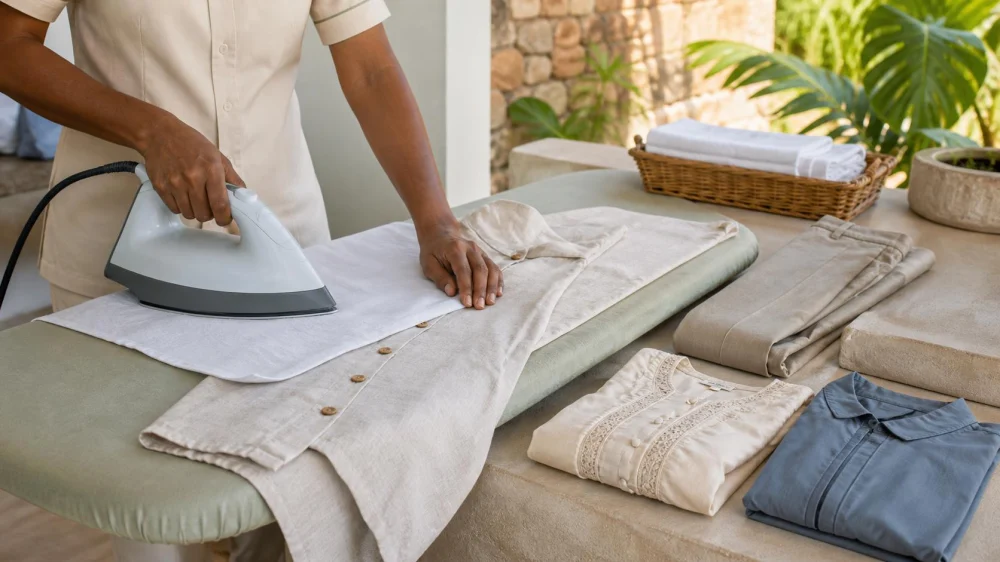
Laundry Pressing in Sigiriya: Heat, Creases, and Delicate Details
Article guide
Quick answer
Before sending travel clothes for pressing in Sigiriya, read every care label and separate items that restrict iron heat, steam, or direct contact. Tell the laundry which creases you want, point out prints, coatings, elastic, pleats, embroidery, and glued details, and agree on the count and price. When clothes return, inspect them in good light before packing or wearing them.
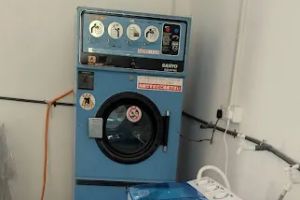
Romantic laundry outlet
KatugastotaKandyCentral Province
8JGF+5P7 Menikkumbura Economic Center, Katugastota, Sri Lanka
Sort before handoff
Do not put the entire clean-clothes pile into a pressing order automatically. Divide garments into “press,” “steam only if permitted,” “fold only,” and “ask first.” Shirts and simple trousers may be straightforward, while technical travel fabrics, waterproof shells, swimwear, stretch garments, embellished tops, and heat-transfer prints may need special handling or no pressing at all.
Empty pockets and remove detachable accessories when the manufacturer allows it. Check buttons, zips, snaps, drawstrings, beads, sequins, patches, and decorative glue. Photograph valuable or unusual pieces and count every item at handoff. If a mark or damage already exists, identify it on the receipt rather than letting it be mistaken for a pressing problem later.

Read the care label
The garment's instructions take priority over a generic fibre chart. Blended fabrics, linings, interfacing, prints, and finishes can require a lower temperature than the main fibre suggests. “Do not iron,” “cool iron,” “iron on reverse,” “no steam,” and “steam only” describe different limits.
If the label is missing or unreadable, do not guess from appearance. Ask the laundry to use a conservative method or decline pressing. A hidden-area test may help a professional evaluate colour, shine, pile, or coating response, but it does not guarantee that every part of the garment will behave identically.
Show the label to staff and ask how the instruction will be recorded for the person doing the work. A verbal exchange at the counter is less useful if the item later moves to a separate pressing station with no note attached.
State the finish you want
“Press this” is incomplete. For trousers, say whether you want a centre crease or a flat front. For shirts, specify whether sleeves should have a crease. Point out pleats that must remain crisp and gathers that should stay soft. Ask whether collars, cuffs, pockets, and button plackets are shaped by hand or placed under a press.
Direct iron contact can create shine, flatten texture, distort pile, or damage prints and coatings. A pressing cloth, reverse-side work, lower heat, or steam without contact may be suitable only when the care instruction permits it. Do not request extra heat to finish faster.
Confirm whether pressing is priced per item, by garment type, or as part of a wash-and-iron service. Record urgent or same-day timing and ask how finished garments will be cooled, hung, folded, and protected from rain or humidity before collection.
Inspect the returned clothes
Count the order before leaving. In good light, check for shine, scorching, colour change, distorted seams, flattened decoration, adhesive lift, water marks, new creases, and stretched or melted areas. Test zips and buttons gently without forcing anything while fabric is still warm.
If the garment is damp from steam, allow it to cool and dry before packing. Folding a warm, moist item into luggage can set unwanted creases and trap odour. Use wide or padded hangers for pieces that need shape support.
Report a concern promptly and keep the receipt, photos, and care-label image. Do not attempt a high-heat correction before the service has inspected the item, because a second treatment can complicate the cause and the remedy.
Pressing-service checklist
- Separate press, steam, fold-only, and ask-first items.
- Read the complete care label for each garment.
- Empty pockets and inspect fasteners and decoration.
- Photograph valuable pieces and existing damage.
- Agree on item count, price, and completion time.
- Specify trouser, sleeve, and pleat creases.
- Point out prints, coatings, elastic, embroidery, and glue.
- Ask how special instructions reach the pressing station.
- Inspect, count, cool, and dry items before packing.
- Keep the receipt until the order is fully checked.
Limitations and special items
This guide is general garment-care planning, not a guarantee that a particular textile can be pressed safely. Care symbols and wording vary by market, and the U.S. Federal Trade Commission source below explains U.S. labelling requirements rather than Sri Lankan law. The garment manufacturer's instructions remain the practical reference.
Vintage, tailored, pleated, beaded, leather, suede, velvet, silk, wool, coated, waterproof, or sentimental garments may need a specialist. If staff cannot explain how they will follow a restrictive label, request cleaning or folding without pressing, or choose another provider.
Frequently asked questions
Is steaming always gentler than ironing?
No. Steam can affect finishes, adhesives, colour, shape, and water-sensitive fabrics. Follow the care label, including any “no steam” instruction.
Can I ask for a hotter press to remove a stubborn crease?
Heat should stay within the garment's safe range. Repeated moisture, time, or professional shaping may be more appropriate than exceeding the label.
Why did dark trousers become shiny?
Pressure and heat can flatten fibres and change how light reflects from the surface. Direct contact and excessive temperature may contribute; show the issue to the service before attempting another press.
Should linen always be pressed at high heat?
Not automatically. A linen blend, trim, coating, print, or lining may lower the safe setting. Use the actual garment label.
What should I do when the care label is missing?
Explain the uncertainty and request a conservative professional assessment. For valuable clothing, skipping pressing may be safer than guessing.
Evidence notes
The U.S. Federal Trade Commission's care-labelling compliance guide explains that labels must warn when ironing could harm a garment and, when repeated ironing is needed, provide suitable ironing information.
The underlying FTC Care Labeling Rule text distinguishes instructions such as warm iron, cool iron, do not iron, iron on the wrong side, no steam, and steam only. These definitions support careful interpretation; they do not establish local Sri Lankan consumer law.
Conclusion
Good pressing is a specification, not simply more heat. Sort the garments, read their labels, describe the finish, document delicate details, and make sure instructions travel with each item. A brief inspection at collection protects both the clothing and the clarity of any conversation with the laundry service.


 TJ Laundry4.0 (5 reviews)
 City Laundry Rambukkana5.0 (4 reviews)
 Home stay laundry4.0 (10 reviews)
 Laundry Hut4.0 (13 reviews)
 Kani loundry4.0 (39 reviews)
 FASHION DRY CLEAN - LAUNDRY MART4.0 (1 reviews)
 Traveller’s Checklist for Using Laundry in Sigiriya
 How to Wash Gym Clothes to Remove Sweat and Odor Forever
 Why Do Clothes Feel Different After Every Wash? Fabric Science Explained
 Best Way to Wash Clothes in Hot Weather Without Damage & Odor
 What's the Best Way to Handle Dirty Laundry Daily for a Cleaner Home
 Your Laundry Might Be Missing Proper Airflow: Tips to Improve Drying Efficiency