
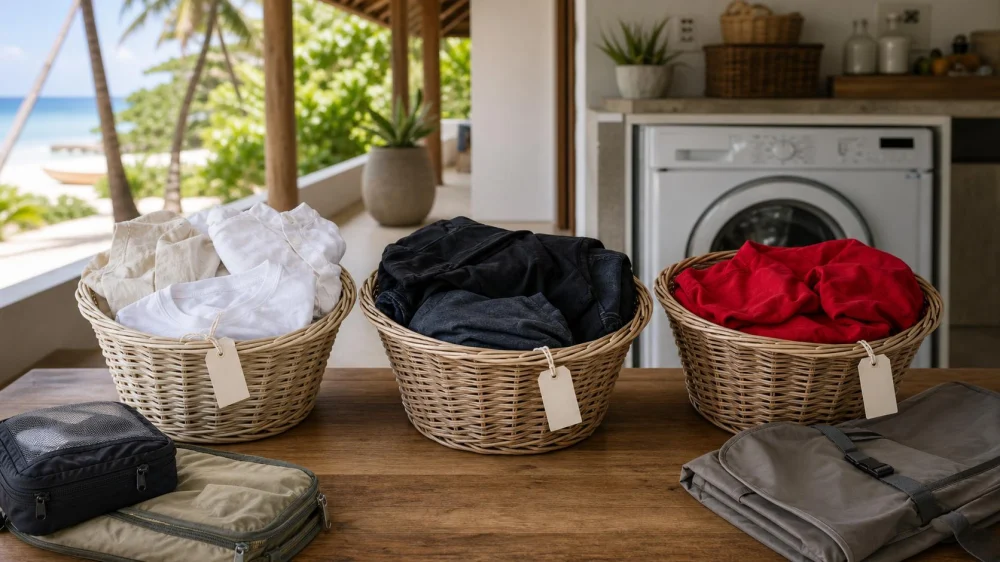
Mixed-Color Travel Laundry: Reduce Dye Transfer Risk
Table of contents
Mixed-color travel laundry is tempting when time is short and a local service charges by weight. Combining everything into one bag can be efficient, but a new dark shirt, red scarf, printed sarong, or unstable dye may transfer colour to lighter garments. Heat and drying can make some staining harder to address, so sorting and clear instructions matter before the wash begins.
No method guarantees that a garment will never bleed. Care labels, previous washing, water temperature, detergent, fibre, dye quality, and cycle length all influence the result. The safest approach is to isolate questionable items and ask the laundry service whether separate loads are available and how they are priced. A small extra charge can be preferable to risking an entire travel wardrobe.
Thambuttegama Laundry
MeegalewaAnuradhapuraNorth Central Province
Pasal junction, kurigas wewa, Meegalewa 60750, Sri Lanka
Why clothing colours can run
Some dye remains loosely attached to fibres and releases into wash water. New garments are often higher risk, but an older item can also bleed after long soaking, exposure to a different detergent, or washing at a higher temperature. Deep reds, indigo denim, saturated black, bright prints, and some handcrafted textiles deserve particular caution, though colour alone cannot predict stability.
Friction and prolonged wet contact can transfer dye even outside a washing machine. A damp dark towel pressed against a light shirt in a laundry bag may leave a mark. Sweat, rain, pool water, or cleaning products can make an unstable item release colour before it reaches the service.
Colour loss from one garment and colour pickup by another are related but different concerns. The source item may fade unevenly, while a white or pale item becomes tinted. Mixed-fibre garments and decorative trims can behave differently within the same piece.
Sort before a laundry-service handoff
Create at least three groups: light colours, stable dark colours, and questionable or delicate items. Keep pure whites away from anything likely to bleed. Separate new dark garments, red or purple textiles, denim, hand-dyed pieces, and items whose labels instruct washing separately. Use different bags or clearly marked inner bundles so the sorting survives the trip to the shop.
Ask whether the service washes each customer’s order separately or combines compatible items from several customers. Confirm whether your colour groups will remain separate and whether there is a minimum charge for each load. If the service cannot honour the separation, take high-risk pieces back rather than assuming staff will identify them.
Count and photograph garments before handoff. Note pre-existing stains, fading, decorative details, and special care. Written instructions should name the item and action, such as “wash this new red shirt alone in cold water; no tumble dry,” rather than simply saying “be careful.”
Identify high-risk garments
Read each care label. Warnings such as wash separately, wash with similar colours, colour may transfer, or do not soak indicate risk. A missing label calls for a conservative approach. Tourist-market textiles, artisanal dyes, vivid beachwear, and recently purchased clothing may not have complete care information.
At home or in suitable accommodation, a cautious spot test may provide information if the manufacturer permits it. Dampen a hidden area with plain cool water and press it with a clean white cloth. Colour on the cloth suggests separation is prudent. A negative spot test does not guarantee the entire garment will be stable in a full wash, and rubbing aggressively can damage the finish.
Also isolate garments contaminated with bleach, hair dye, strong skincare products, or cleaning chemicals. These can cause local colour loss rather than transferable dye. Do not send clothing wet with an unknown chemical in a sealed bag; follow the product’s safety guidance and tell the service what contacted the fabric.
Choose conservative wash settings
Follow the care label first. Cool water often reduces dye release compared with hotter water, but it does not make an unstable dye safe. Use an appropriate detergent amount and avoid prolonged soaking unless the label specifically calls for it. Overloading a machine reduces rinsing and increases fabric-to-fabric contact.
Ask the service to avoid bleach and unapproved stain removers on coloured clothing. Chlorine bleach can remove colour and weaken fibres; oxygen-based products are not automatically safe for every dye or embellishment. Spot treatments should be tested and approved according to the item’s instructions.
Hand washing is not automatically gentler. Aggressive rubbing, wringing, long soaking, or hot water can release dye and distort fabric. If hand washing a questionable item, use a clean basin, follow the label, keep the session short, rinse thoroughly, and protect surrounding surfaces from staining.
Understand colour-catcher sheet limits
Commercial colour-catcher sheets are designed to capture some loose dye in wash water. They may be useful as an additional precaution when their instructions permit, but they cannot guarantee that mixed colours will not transfer. They do not replace sorting, correct temperature, or separate washing for a label that requires it.
Ask before putting any laundry additive into a service’s machine. The shop may use a dosing system, have equipment rules, or decline customer-provided products. Never add salt, vinegar, or another household substance based on a general internet claim; these can be ineffective, affect materials, or interfere with the service’s process.
What to do if dye transfers
Inspect laundry before it enters a dryer or is ironed. If a light garment has picked up colour, keep it damp and separate it from the source item. Do not apply heat. Photograph the affected areas and check the care label. Contact the laundry service immediately if it handled the wash.
Rewashing promptly with the appropriate detergent may remove some loose dye, but the correct method depends on fibre, colour, trim, and original finish. A commercial colour-run remover can also strip the garment’s intended colour or damage embellishments. Test only as directed and consider a professional textile cleaner for valuable or delicate items.
Do not mix bleach with ammonia, acids, vinegar, or other cleaners. Dangerous gases can result. If you do not know what product was already used, rinse according to safe product guidance and seek professional help rather than layering chemicals.
Pause before drying or ironing
High dryer heat or ironing can make some transferred colour more difficult to address. Check items in good light while they are still damp. Examine collars, cuffs, pale panels, printed areas, and places that touched a dark garment. Ask a service to hold questionable items out of the dryer and press until you approve the result.
Dry source and affected garments separately. Avoid placing a wet unstable item on a pale towel, hotel sheet, upholstered chair, painted rail, or porous floor. Use a clean rack in an approved area and protect surfaces without blocking airflow.
Document a laundry-service concern
At pickup, compare the item count and inspect colour groups. If transfer occurred, show staff the specific garments, receipt, photographs from before washing, and written separation instructions. Ask what wash and drying process was used. Keep packaging and do not alter the item before the service can inspect it.
Request a clear proposed remedy and timing. Policies, liability limits, and local consumer processes vary. Focus on documentation rather than trying to prove a chemical cause at the counter. If the service asks to retain the garment, obtain a written receipt identifying it and its condition.
Mixed-colour laundry checklist
Before washing, read labels, isolate whites, separate new and saturated colours, photograph valuable items, and state instructions in writing. Confirm whether the service mixes customer loads and how separate loads are charged. Choose label-approved water temperature, detergent, drying, and ironing.
Inspect while laundry is damp and before heat. If colour moved, separate the items, document the problem, and avoid improvised chemical mixtures. Sorting takes only a few minutes, but it gives light clothing, dark travel basics, and special textiles a much better chance of returning in the colours you intended.





 Queens Laundry - Gatambe3.0 (128 reviews)
 Home stay laundry4.0 (10 reviews)
 Laundry4.0 (20 reviews)
 Sigiri Super Clean Laundry (Pvt) Ltd4.0 (477 reviews)
 Thambuttegama Laundry5.0 (2 reviews)
 land sale4.0 (1 reviews)
 Clever Hacks for Washing Cotton Towels Softly and Safely
 Why Are My Clothes Not Absorbing Water Properly and How to Fix It
 Clothes Smell Bad After Storage? Fast Fixes That Actually Work
 Why Do Clothes Get Wrinkles So Easily? Causes and Solutions
 Struggling with Sweat Stains? Easy Fixes That Work Fast
 How to Remove Ink Stains From Cotton and Linen