
Sun Hat Laundry in Sigiriya: Shape, Sweat, and Drying
Table of contents
Quick answer: Check a sun hat's fibre, brim structure, trims, and care instructions before cleaning it in Sigiriya. Brush off dry soil, test uncertain colours, and use only a permitted gentle method. Avoid twisting, high heat, and unsupported hanging. Reshape the crown and brim while damp, dry fully with airflow, and inspect the sweatband and seams before packing.

Identify the hat
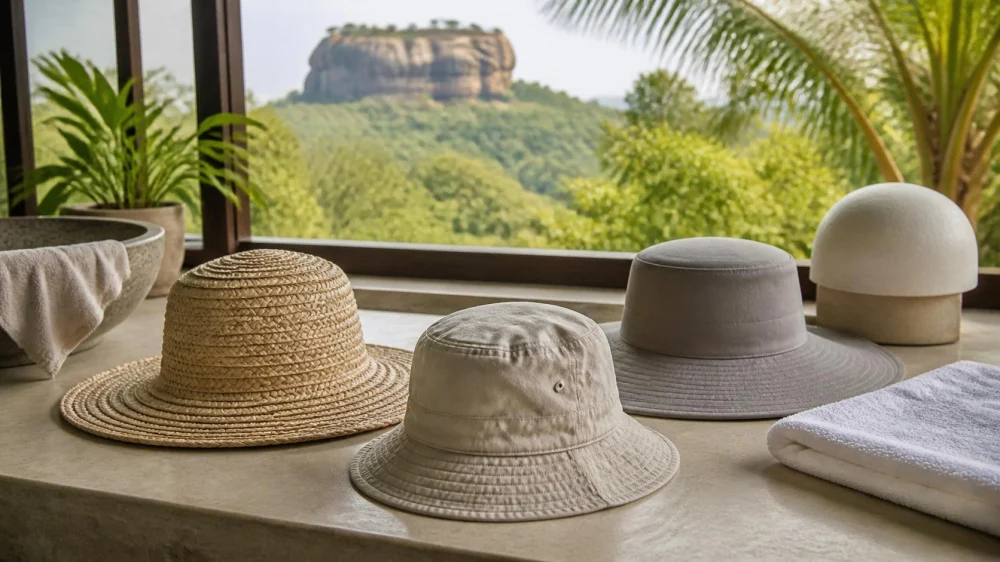
A “sun hat” may be woven straw or paper fibre, cotton canvas, polyester, nylon, felt, or a blend. The brim can contain wire, foam, cardboard-like stiffener, interfacing, or multiple stitched layers. These hidden materials determine whether immersion, agitation, and heat are safe.
Read the care label if present and keep purchase instructions. Note leather bands, glued decorations, metal eyelets, embroidery, chin cords, removable sweatbands, and sun-protective finishes. If the material is unknown or the label prohibits washing, choose conservative spot care or ask a suitable cleaner to assess it.
Inspect before cleaning
Photograph the crown, brim, inside band, and decorations in good light. Check for cracks, broken straw, loose stitching, rust, colour change, sweat rings, sunscreen, makeup, mud, and previous distortion. Dry brittle fibres or failing glue may worsen with water.
- Empty hidden pockets and detach only approved removable parts.
- Measure brim width or trace its outline if shape is critical.
- Point out stains and prior cleaning attempts to the service.
- Do not pull loose threads or cut protruding straw ends.
Choose home or service care
Simple washable fabric hats may be suitable for careful home cleaning when their instructions allow it. Structured, woven, decorated, valuable, or sentimental hats are better assessed by a professional. A general laundry by-weight load may be too aggressive even when the fabric itself is washable.
When using a laundry service in Sigiriya, show the actual hat and ask whether it will be immersed, hand-cleaned, machine-washed, spot-treated, or pressed. Confirm detergent, water temperature, drying method, shape support, price, risk discussion, and pickup time. Obtain a receipt that identifies the hat.
Treat sweat and soil
Start by brushing or wiping away dry dust using the method appropriate for the material. Rubbing wet mud immediately can push soil deeper. Test any approved cleaning solution on an inconspicuous area and blot with a clean white cloth to check for dye transfer.
Work gently from the outside of a mark toward the centre. Avoid soaking only one visible patch unless instructions allow it, because a water ring may remain. Do not use chlorine bleach, strong solvents, undiluted detergent, abrasive brushes, or an improvised stain mixture. Sweat, sunscreen, and cosmetics can alter dye or finish permanently, so complete removal is not guaranteed.
Protect the shape
Never wring or twist a structured hat. Press moisture between clean towels without crushing the crown. While the hat is evenly damp, smooth the brim on a clean flat surface and support the crown with a rounded, colourfast object that does not stretch it. Keep wire edges in their original line.
Do not force a deeply creased brim in the opposite direction. Steam, ironing, and pressing can damage glue, coatings, synthetic fibres, straw, and internal stiffeners. Use them only when the care instructions and an experienced cleaner consider them appropriate.
Dry and pack
Dry the hat in moving air away from intense sun, heaters, hair dryers, and hot machinery unless the label expressly permits heat. Rotate it occasionally while maintaining support. In humid weather, the sweatband, crown seams, brim layers, and decorations can remain damp after the surface feels dry.
Before packing, smell and feel the hidden areas and allow more time if they are cool or damp. Fill the crown loosely with clean clothing or soft tissue if the hat needs support, place it brim-up, and avoid heavy items. Do not seal a damp hat in plastic or compress a rigid brim.
Limitations and cautions
Cleaning cannot reverse sun fading, fibre breakage, weakened glue, or long-set sweat damage. Even careful wetting can change an unknown stiffener. Discuss visible risks before authorising service and consider specialist hat or textile care for antique, luxury, heavily decorated, or irreplaceable pieces.
Frequently asked questions
Can a bucket hat go in a washing machine?
Only if its care label allows machine washing. Check the brim insert, trims, colour, and recommended cycle before deciding.
Can I dry a hat in direct tropical sun?
Direct sun may fade colour or affect shape. Follow the label; shaded airflow is the safer default for many uncertain hats.
What if the brim is already bent?
Photograph it and ask whether reshaping is appropriate. Do not apply strong heat or force, which can crack fibres or deform hidden structure.
Next steps
- Identify fibre, structure, trims, and care instructions.
- Document stains, damage, and the original shape.
- Choose an approved home method or suitable laundry service.
- Clean gently and support the damp crown and brim.
- Dry every layer fully before packing or wearing.




 Wash Master3.0 (125 reviews)
 Colombo Cleaners4.0 (18 reviews)
 Laundry service nilaveli4.0 (2 reviews)
 Spin & Dry Laundry4.0 (12 reviews)
 Laundry Hut4.0 (13 reviews)
 Quick & clean laundry2.0 (5 reviews)
 Your Laundry Might Be Too Much for One Load: Smart Washing Tips
 Laundry Feels Hard? Make It Easier with Simple Home Habits
 Clothes Not Looking Clean? Find the Real Laundry Problems
 How to Wash Clothes for Everyday Use: The Best Methods and Tips
 Keep Your Laundry Smelling Fresh Longer: Tips and Tricks
 Laundry Not Working the Way You Expect? Here's Why