
Laundry Care Labels Abroad: Photograph, Translate, and Confirm
On this page
Quick answer
When a laundry care label is unfamiliar, do not rely on one symbol or a quick guess. Photograph every side in good light, identify fibre content and all washing, bleaching, drying, ironing, and professional-care instructions, then translate any words. Show the original label and your concern to the Sigiriya laundry service before approving treatment.
This guide is for travellers in Sri Lanka and elsewhere who encounter unfamiliar languages, symbols, or shortened instructions. The garment manufacturer's label and a competent service's item-specific assessment take priority over general summaries.
What a care label tells you
A laundry care label communicates the manufacturer's recommended limits for cleaning and finishing a textile product. It may cover washing method and temperature, bleach use, tumble drying, natural drying, ironing, and professional wet or dry cleaning. Another part may list fibre composition, country information, model details, or legal disclosures.
The complete sequence matters. A garment might permit machine washing but prohibit tumble drying. It might allow ironing only at a lower temperature. Reading only the wash symbol can therefore cause damage later in the process.
Labels vary in placement. Check the side seam, waistband, neck, pocket, lining, and removable components. A jacket shell, detachable hood, belt, padding, or liner may carry separate instructions. Do not assume an accessory follows the main garment.
Older, altered, handmade, or second-hand clothing may have missing or unreliable labels. When fibre and construction are uncertain, conservative treatment and professional assessment are more sensible than a confident guess.

Red Rose Washing Hub🌹
RikillagaskadaNuwara EliyaCentral Province
Padiyapelella Rd, Rikillagaskada 41160, Sri Lanka
Photograph the full label
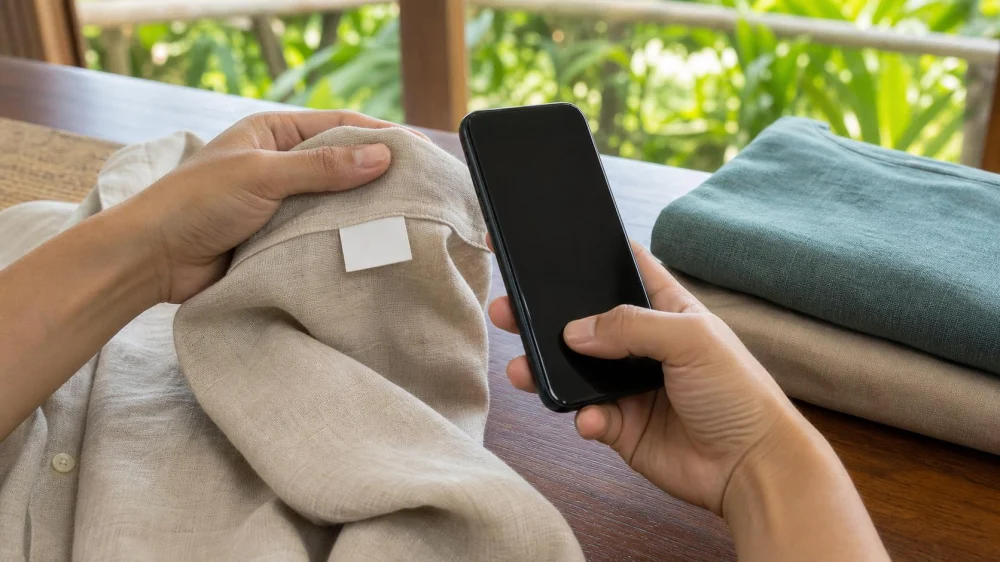
Make a record before the garment enters a service. Smooth the label without stretching it and use bright indirect light. Photograph the full label first, then take close images of each section. Capture front and back because instructions may continue across folds or layers.
Keep the camera parallel so symbols stay proportionate. Tap to focus on the print and check the image at full size before putting the garment away. If white fabric reflects light, reduce glare by changing the angle rather than covering part of the label with a finger.
Include a garment overview and close images of fragile details, stains, damage, and colour contrasts. This connects the label to the right item when several clothes are in the order. Use a neutral description on the receipt rather than relying only on a photo.
Store the images offline if mobile coverage is uncertain. Rename or group them in the same order as the laundry receipt. Do not post labels publicly when they show a personal identifier or unique tracking information.
Translate without guessing
Begin with the symbol family, not an isolated shape. Washing, bleaching, drying, ironing, and professional-care symbols belong to different categories. Bars, dots, crosses, temperature values, and enclosure shapes modify meaning. A small missed mark can change the instruction.
Use a reliable current reference appropriate to the label system, or ask the garment manufacturer. Image-translation tools can help with words, but they can misread tiny print, abbreviations, fibre names, negation, and numbers. Compare the translation with the original rather than replacing it.
When text names a fibre, distinguish composition from care. Knowing that a garment contains cotton, polyester, wool, silk, elastane, or another fibre helps explain risk, but construction, dye, trim, coating, adhesive, and finish also matter. Fibre alone does not authorise a wash method.
If two instructions seem inconsistent, stop. Re-photograph the label, check whether one line belongs to a detachable component, and contact the manufacturer or a specialist cleaner. Do not choose the more aggressive interpretation for convenience.
Confirm instructions with the laundry
Show the actual garment and label to the Sigiriya laundry service. State the result you need and any non-negotiable limits: no tumble drying, no bleach, low-temperature ironing, separate colour handling, no fragrance, or no professional solvent treatment. Ask the service to repeat the planned process.
Useful questions include:
- Will this item be washed separately or with a mixed load?
- Which water and drying temperatures will be used?
- Are bleach, oxygen products, softener, fragrance, or stain removers added automatically?
- Will the item be tumble dried, line dried, pressed, or steamed?
- Can the service follow a “do not” instruction throughout the full workflow?
- Will staff contact me before changing the agreed method?
Get special instructions written on the receipt or order record. A verbal conversation can be forgotten during handoff between collection, sorting, washing, finishing, and delivery staff. If the service cannot accommodate the label, keep the item out of the load.
Traveller checklist
- Find every label. Check shells, liners, hoods, belts, and accessories.
- Photograph both sides. Capture overview and close detail in focus.
- Read the full sequence. Cover wash, bleach, dry, iron, and professional care.
- Translate words carefully. Keep the original visible for comparison.
- Note fibre and construction. Record coatings, prints, trims, and glued parts.
- Describe existing damage. Photograph loose seams, pulls, fading, and stains.
- Confirm the proposed process. Ask the service to explain each stage.
- Write special limits. Keep them on the receipt and retain a copy.
- Inspect at collection. Compare item count, condition, dryness, and agreed finish.
Important notes and limitations
Symbol systems and legal label requirements are not identical everywhere, and manufacturers can use additional text or proprietary instructions. Translation apps and online charts may be incomplete or outdated. Use them to support, not replace, the original label and professional judgement.
A care-compliant process can still reveal hidden colour weakness, old adhesive failure, or previous damage. No method guarantees stain removal. Valuable, antique, heavily embellished, coated, or structurally complex items may need a specialist cleaner rather than ordinary travel laundry.
Frequently asked questions
What if the care label has been cut out?
Ask the manufacturer if the item can be identified. Otherwise describe the unknown fibre and construction to the cleaner and choose a conservative assessment rather than assuming.
Can I trust a phone camera translation?
Use it as a clue. Verify tiny text, temperatures, negative instructions, and abbreviations against the original and another reliable source.
Does the fibre content tell me how to wash the garment?
Not completely. Dye, lining, coating, trim, thread, shape, and finish may impose stricter limits than the main fibre.
Should I remove a care label before travel?
Usually it is more useful to keep it attached. If comfort requires removal, first photograph every side and store the images with a clear garment description.
Evidence note
The guidance reflects general textile-care practice: read the complete label, preserve the original information, treat translation as a verification task, and document special instructions at service handoff. Standards and garments vary, so manufacturer guidance and an item-specific professional assessment remain decisive.
Next steps
Before visiting a Sigiriya laundry, photograph the labels on every sensitive garment and make a one-line instruction list. At the counter, compare that list with the service's planned wash, dry, and finish. Remove any item the service cannot confidently handle, and inspect the completed order before leaving.



 Spin & Dry Laundry4.0 (12 reviews)
 University Laundry0.0 (0 reviews)
 Vishlight detergent5.0 (1 reviews)
 Saman cleaners3.0 (37 reviews)
 KARISHMAN QUICK WASH LAUNDRY4.0 (19 reviews)
 Sun Shine Laundry3.0 (12 reviews)
 Why Do Clothes Feel Different After Every Wash? Fabric Science Explained
 How to Wash Clothes With Delicate Lace Trim
 Before the Wash: Secure Zips, Fasteners and Drawstrings
 Why Do Clothes Get Wrinkles So Easily? Causes and Solutions
 Rain Jacket Laundry in Sigiriya: Protect the Membrane and Finish
 Why Your Laundry Might Not Smell Fresh Enough and How to Fix It