
Sunscreen Stains on Travel Clothes: Blot, Check, and Wash
Article guide
Quick answer
For sunscreen on washable travel clothes, remove excess product without spreading it, read the care label, and pretreat with a compatible laundry detergent or prewash stain remover. Wash at the warmest temperature allowed for the fabric, then inspect before machine drying or ironing because heat can make a remaining mark harder to remove. Delicate, dry-clean-only, coated, or colour-unstable items need specialised advice.

Seya Laundry Mart
PolonnaruwaNorth Central Province
71 Maradankadawala-Habarana-Thirukkondaiadimadu Hwy, Polonnaruwa, Sri Lanka
First response
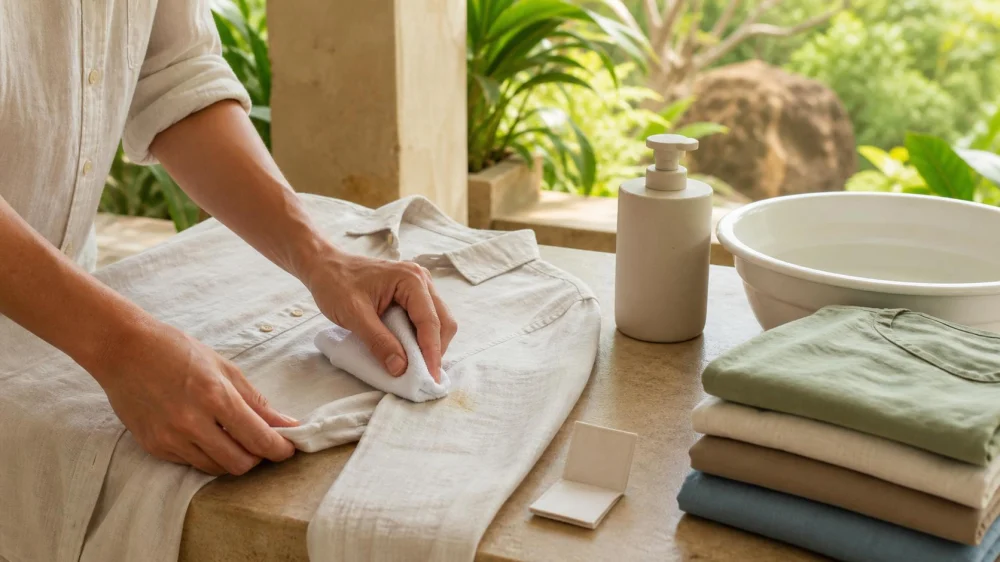
Act while the mark is fresh, but do not rush into aggressive rubbing. Lift thick lotion with the edge of a spoon or another dull, clean tool. Blot liquid residue with a plain white cloth, working from the outside toward the centre. Avoid coloured napkins that might transfer dye.
If you cannot wash immediately, keep the garment separate from clean clothes. Do not roll it tightly while wet or leave it baking in a hot vehicle. Record what caused the stain, because a tinted, mineral, oil-rich, spray, or water-resistant sunscreen may respond differently from a lighter lotion.
Do not use hotel hand soap, shampoo, sanitiser, bleach, or a mystery spot cleaner merely because it is available. Fragrance, colour, solvents, and alkalinity can affect fabric or finish. A controlled treatment is easier to assess than several mixed products.
Check the garment and product
Read the sewn-in care label before adding water or cleaner. Note the fibre, wash temperature, bleach restriction, drying method, and whether professional cleaning is required. Also inspect trims, prints, elastic, waterproof membranes, coatings, and glued details that may have stricter needs than the main fabric.
Check the sunscreen container if available. Knowing whether the product is tinted or especially oily helps you describe the stain to a laundry service. Do not treat the ingredient list as a do-it-yourself chemistry recipe; the finished formulation and textile both matter.
Test the intended stain remover on a hidden area when the garment and product directions allow it. Apply a small amount, wait as directed, rinse or blot, and check for colour loss, texture change, rings, or finish damage. Stop if the test changes the fabric.
Pretreat and wash
For a washable, colourfast garment, apply a compatible prewash stain remover or liquid laundry detergent to the affected area according to its label. Work it in gently with fingers or a soft tool only if the fabric tolerates agitation. Allow the stated contact time; do not let a product dry on the fabric unless its directions specifically permit that.
Wash the item according to the garment label, using the warmest water that is safe for it. More heat is not automatically better. A temperature beyond the label can shrink fibres, damage elastane, change coatings, or set colour loss. Use a correctly measured detergent and avoid overloading the machine so the garment can move and rinse.
Keep light and dark items separated when colour transfer is possible. If a local laundry service handles the wash, point out the mark, identify the sunscreen, and ask what treatment and temperature it proposes before handing over the item.
Dry only after rechecking
Inspect the garment in good light while it is still damp. Sunscreen can leave an oily shadow, yellow or orange tone, or a ring at the edge of treatment. If the mark remains, repeat a label-safe pretreatment and wash rather than putting the item directly into a hot dryer.
Air-dry when the care label permits, preferably out of intense direct sun when fading or heat sensitivity is a concern. Do not iron the stained area. Once dry, check again from both sides because a faint oil mark may become more visible.
If repeated careful treatment makes no progress, stop. Additional rubbing, concentrated chemicals, or escalating heat can cause more permanent damage than the original stain.
Travel laundry checklist
- Lift excess sunscreen without spreading it.
- Blot with a clean white cloth.
- Separate the item from clean travel clothes.
- Read the full garment care label.
- Identify the sunscreen type when possible.
- Test a compatible treatment on a hidden area.
- Pretreat according to product directions.
- Wash at a label-safe temperature.
- Inspect before machine drying or ironing.
- Escalate delicate or persistent marks to a professional cleaner.
Limitations and professional care
Stain removal is not guaranteed. Fibre, dye, finish, product formula, age of the stain, prior heat, and earlier treatments all affect the result. This guide is for ordinary washable garments and cannot replace the care label or advice from the garment manufacturer.
Take dry-clean-only, silk, wool, leather, suede, embellished, tailored, vintage, waterproof, or sentimental items to a cleaner with relevant experience. Tell the cleaner what was spilled and every product already used. Never combine chlorine bleach, ammonia, acids, solvents, or other cleaners; mixing products can damage fabric and create hazardous fumes.
Frequently asked questions
Can I put a sunscreen-stained shirt straight in the washer?
Pretreatment may improve removal, especially for an oily product. First check the care label, lift excess lotion, and use a compatible pretreatment as directed.
Why did the stain look worse after drying?
Heat can make a remaining stain harder to remove, and an oily shadow may become easier to see after moisture evaporates. Recheck before using a dryer or iron.
Should I scrub the mark with a brush?
Not automatically. Hard scrubbing can spread the product, abrade fibres, or change the fabric's appearance. Use gentle action only when the garment and treatment directions allow it.
Can a Sigiriya laundry service remove it?
A service may have suitable products and experience, but results depend on the item and stain. Show the mark, share the care label and sunscreen details, and ask about the proposed process and damage policy.
What if I already machine-dried the garment?
Do not escalate to harsh chemicals. A label-compatible second treatment may still help, but a professional cleaner is the safer next step for valuable or delicate clothing.
Evidence notes
The University of Georgia Extension's textile-care guidance for cosmetics and sunscreen begins by advising readers to check the garment care label and describes pretreatment approaches for washable fabrics.
The American Cleaning Institute's sunscreen-on-clothes guidance recommends pretreating, washing at the hottest temperature safe for the fabric, and checking that the stain is gone before machine drying because heat can set remaining stains.
Conclusion
A sunscreen mark calls for a measured sequence: remove excess, read the label, test, pretreat, wash, and inspect before adding heat. While travelling, resist improvised chemical combinations and tell a laundry service exactly what happened. Protecting the fabric is as important as chasing the last trace of the stain.






 Laundry NNSH0.0 (0 reviews)
 LOTUS LAUNDRY CHEMICALS5.0 (1 reviews)
 Yogan stores & Laundry Service4.0 (43 reviews)
 Dammi Laundry5.0 (14 reviews)
 Moris Laundry0.0 (0 reviews)
 Hiru(හිරු) Laundry Sigiriya5.0 (3 reviews)
 Effective Solutions for Clothes Not Drying Properly Indoors
 Clothes Smell Bad After Storage? Fast Fixes That Actually Work
 Easy Hacks to Remove Tomato Sauce Stains From White Cotton
 Swimsuit Laundry After Pool or Sea: Rinse, Wash, and Dry
 Clothes Losing Softness? Simple Tips to Restore Fabric Comfort
 How to Wash Polyester Clothes Without Losing Shape or Shine