
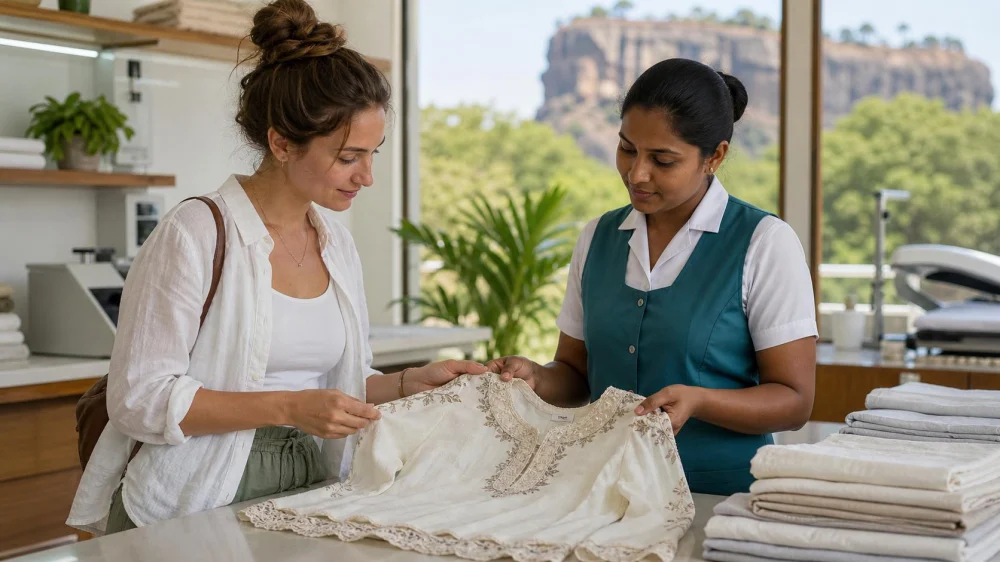
How to Choose a Laundry Service for Delicate Clothes
On this page
Quick answer
Choose a laundry service for delicate clothes by showing each item before booking, confirming the fibre, care label, colour, trim, and existing damage, and asking which cleaning and drying method will be used. Prefer a provider that records special instructions, separates the item from standard loads, explains risks honestly, and lets you approve the method. Do not rely on “delicate wash” as a complete description.
A delicate garment is an item whose fibres, construction, dye, finish, shape, or decoration may be damaged by ordinary agitation, heat, detergent, extraction, or tumble drying.
This guide helps travellers and residents compare laundry services in Sigiriya and elsewhere in Sri Lanka. Sigiri Laundry is a guide to local options; it should not be assumed to perform the cleaning itself. Confirm capabilities, pricing, timing, and responsibility directly with the selected provider.

LAUNDERETTE BY DOBI MASTER
605 William Gopallawa Mawatha, Kandy 20000, Sri Lanka
Identify what makes the item delicate
Start with the sewn-in care label, but inspect the complete garment. A mixed-material item may need treatment based on its most sensitive component. Photograph the label and item in good light before handoff.
- Fibre: silk, wool, cashmere, rayon or viscose, lace, and some technical fabrics may need specialised care.
- Construction: loose knits, structured jackets, glued layers, pleats, and shaped cups can lose form.
- Colour: dark, saturated, hand-dyed, or contrasting panels may release or transfer dye.
- Decoration: beads, sequins, embroidery, metallic thread, prints, and bonded logos may react to cleaning or heat.
- Condition: weak seams, small tears, loose buttons, previous repairs, and aged elastic can worsen during cleaning.
- Sentimental or financial value: an irreplaceable item may require a specialist or no treatment until expert advice is available.
If the care label is missing or unclear, tell the provider. Do not guess a fibre based only on appearance.
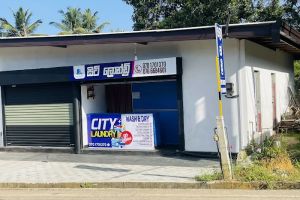
Questions to ask the laundry service
- Will staff inspect the item before accepting it? Existing marks and damage should be noted.
- Does the provider handle this fibre and construction regularly? Ask for the method, not an unsupported claim of expertise.
- Will the item be washed alone or with other garments? Separation may matter for colour, lint, hardware, and snagging.
- Which detergent and temperature will be used? State any fragrance or ingredient concerns.
- How will the item be dried and reshaped? Washing and drying are separate risk decisions.
- Will stains be treated first? Identify the likely stain source and any product already used.
- Will staff contact you before changing the agreed method? Provide a working phone or messaging contact.
- What are the damage, loss, and complaint procedures? Understand the terms before leaving the item.
A useful answer names a process and its limits. “We wash everything carefully” does not explain water temperature, agitation, separation, drying, or stain treatment.
Prepare delicate clothes for handoff
Empty every pocket and remove detachable accessories when the care instructions allow. Close or protect fasteners only as recommended for the garment. Do not cut out the care label.
Point out each stain and explain what caused it, when it occurred, and what treatment has already been attempted. Mixing cleaning products or repeating aggressive spot treatment can set a stain or damage dye and finish.
Take clear photos of the front, back, care label, trims, and existing defects. Make a simple item list and obtain a receipt or digital record. For multiple delicate pieces, bag and label them separately without using pins, adhesive tape, or ink that could mark fabric.
Compare proposed cleaning methods
Hand washing
Hand washing can reduce machine agitation, but it is not automatically safe. Water, detergent, soaking, squeezing, and hanging can still affect dye, texture, and shape. The care label and garment construction should support the method.
Machine delicate cycles
A gentle cycle controls some motion and extraction, yet drum size, load, water temperature, detergent, and protective bags still matter. Ask whether the item will be isolated from zippers, hooks, rough fabrics, and lint-producing loads.
Professional solvent or specialist cleaning
Some care labels direct professional cleaning, but decoration, adhesives, and previous damage can still create risk. Confirm that the provider understands the symbols and will inspect trims and stains before processing.
Drying and finishing
Heat can shrink, distort, fade, or damage elastic and bonded details. Hanging can stretch wet knits. Ask whether the garment will be laid flat, hung with support, air dried, tumble dried, steamed, or pressed, and whether that matches its instructions.
Check items at collection
Inspect delicate clothes before leaving when practical. Use good light and compare them with the handoff record.
- Confirm every item and detachable part is present.
- Check colour, shape, size, seams, buttons, zippers, embroidery, and prints.
- Look for new shine, scorch marks, pulls, holes, dye transfer, or detergent residue.
- Confirm the garment is completely dry before it is sealed in luggage.
- Raise concerns promptly and keep the receipt, photos, packaging, and written instructions.
Do not apply another product or attempt a repair before the provider has inspected a suspected problem. Additional treatment can make the cause harder to evaluate.
Delicate laundry decision checklist
- Read and photograph the care label.
- Identify fibre, trim, construction, stains, and existing damage.
- Ask for the exact cleaning, separation, drying, and finishing method.
- Confirm the provider will pause before changing the method.
- Understand turnaround time, price, and damage or loss terms.
- Record items and special instructions at handoff.
- Keep valuable or irreplaceable items until suitable expertise is confirmed.
- Inspect and count items at collection.
Limits and evidence notes
The criteria in this guide reflect general textile-care principles: follow the care label, limit unapproved heat and agitation, consider every material and trim, prevent colour and hardware contact, and document condition. They do not guarantee an outcome for a particular garment or laundry provider.
Use the garment manufacturer’s current care instructions when available. For high-value, antique, ceremonial, structured, leather, suede, or unusually decorated items, seek a provider with relevant specialist capability. A local guide or directory listing is a starting point, not verification of equipment, training, availability, price, or insurance.
Frequently asked questions
Is a mesh laundry bag enough to protect delicate clothing?
It can reduce snagging, but it does not control temperature, detergent, dye transfer, drying, or whether the garment is washable. Treat it as one protective measure, not a complete method.
Should I remove a stain before using a laundry service?
Avoid unapproved treatment. Blot or protect the item only as its care guidance allows, then tell the provider what caused the stain and what you have already done.
Can silk and wool be washed together?
Do not assume they can. Fibre, colour, construction, detergent, water temperature, and movement requirements may differ. Ask the provider to assess each item separately.
What if the care label says “dry clean only”?
Show the label before booking and choose a provider that can explain the appropriate professional process. Do not substitute a water wash merely because it is described as gentle.
Should a delicate garment be returned in plastic?
Short transport packaging may protect it, but ensure the item is dry and follow long-term storage guidance for the material. Plastic can trap moisture if the garment is damp.
How do I compare two laundry providers?
Give both the same garment details and questions. Compare the specificity of their method, their willingness to note risks, their records and terms, and their plan for contacting you.
Next steps
Separate the delicate item from ordinary laundry, photograph its condition and label, and shortlist providers that invite inspection before quoting. Ask each provider to explain the method from stain treatment through drying. Choose the clearest suitable process, record the agreement, and check the garment at collection before packing it away.



 Pulasthi Herath5.0 (1 reviews)
 Colombo Cleaners4.0 (18 reviews)
 Kani loundry4.0 (39 reviews)
 The laundry room2.0 (7 reviews)
 Queens Laundry3.0 (20 reviews)
 Nilaveli Laundry Service5.0 (5 reviews)
 Your Laundry Might Be Too Much for One Load: Smart Washing Tips
 Clever Hacks for Washing Cotton Towels Softly and Safely
 Why Do Clothes Get Wrinkles So Easily? Causes and Solutions
 How to Get Mustard Stains Out of Clothes at Home
 Expert Advice on Washing Cotton Shirts Without Shrinking
 Clever Methods to Remove Mud Stains From Kids’ Jeans